ChatGPT Ads Are Coming. Here Is What Marketers Should Know.
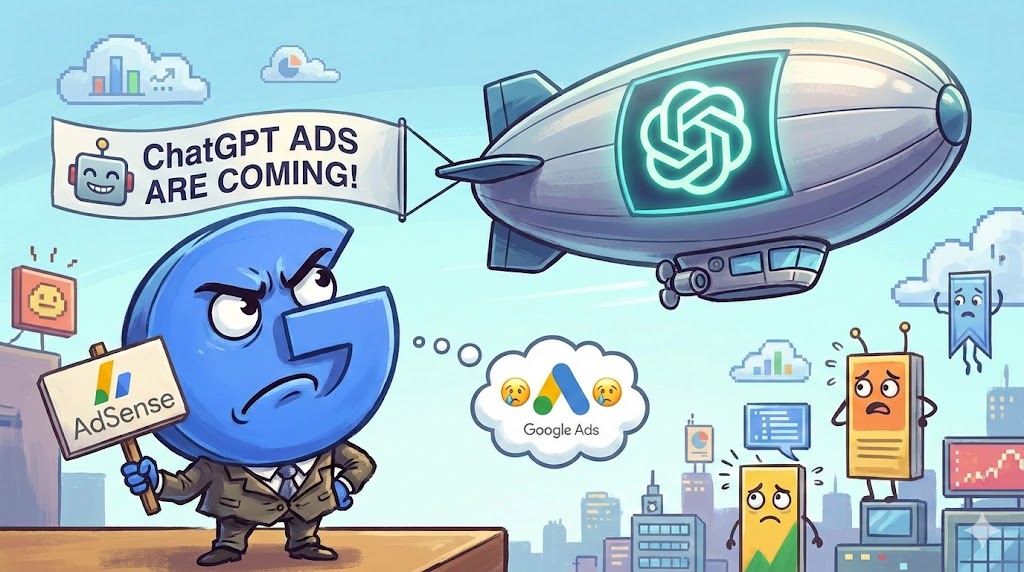
ChatGPT Ads Are Coming...
If you work in digital marketing, you have probably felt it already.
Buyer behavior is changing, and AI is increasingly sitting at the center of it.
Now, OpenAI is preparing to introduce ads directly inside ChatGPT. This marks a major shift in how advertising may work inside AI-driven experiences and it raises important questions for advertisers about opportunity, risk, and measurement.
This is not just a new media placement. It is the beginning of advertising inside an AI decision layer.
What OpenAI Has Announced About ChatGPT Ads
Based on what has been shared publicly so far, early ads will:
- Appear only to logged-in adult users in the United States
- Be limited to Free and ChatGPT Go plans
- Be clearly labeled as sponsored content
- Appear outside the AI’s response, typically below the answer
- Avoid sensitive categories like health and political topics
Paid tiers such as Plus, Pro, Enterprise, and Edu will remain ad-free.
The goal appears to be monetization without disrupting trust or the quality of responses. Whether that balance holds as the platform scales is the question advertisers are watching closely.
Why This Matters More Than a Typical Ad Launch
ChatGPT is not a social feed and it is not a traditional search engine.
People use ChatGPT to:
- Ask for recommendations
- Compare options
- Validate decisions
- Shortlist tools, products, and services
Advertising in this environment does not interrupt attention. It enters an active decision process.
That is why marketers are paying attention. Ads in ChatGPT have the potential to influence what gets considered, not just what gets clicked.
Early Industry Sentiment From Marketers and Operators
Reaction across LinkedIn and X has been mixed but thoughtful. Very few people are dismissing this outright. Most see both upside and real risk.
Optimism: High-Intent Access at the Right Moment
Many marketers view ChatGPT ads as a rare chance to reach users when intent is already formed. Instead of competing for attention, brands can show up during evaluation and comparison.
This is why some see ChatGPT ads behaving more like bottom-funnel search than awareness media, especially in categories where buyers actively ask for recommendations.
Caution: Control, Pricing, and Channel Conflict
At the same time, experienced operators are raising important concerns.
Posts from leaders like Ben Jata highlight how AI-driven commerce can collapse traditional channel separation. Direct-to-consumer, wholesale, and marketplace strategies may all collide in a single AI-powered experience

Others, including Peter Wilmot, have pointed out a deeper risk. If discovery, comparison, and even checkout happen inside ChatGPT, brands risk losing ownership of the customer relationship itself.
This mirrors what many industries experienced with Amazon, OTAs, and large marketplaces. Distribution can be powerful, but it often comes at the cost of control.

The Bigger Shift Advertisers Need to Understand
ChatGPT is evolving into something larger than a content tool. It is becoming a decision interface.
When ads live inside that interface, they influence:
- What products are considered
- Which options feel credible
- What choice feels easiest to make
This is fundamentally different from buying impressions on a feed or bidding on keywords in a search result.
Advertisers are no longer just buying attention. They are entering the recommendation layer.
Measurement Will Be the Real Stress Test
One of the biggest challenges ahead will be measurement.
If ChatGPT becomes a common final step before purchase, performance may look exceptionally strong on paper. Clicks and revenue will be tightly correlated. Return on ad spend may appear unusually high.
The risk is that not all of that performance will be incremental.
Some conversions may simply be captured more conveniently rather than created. Traditional attribution models and even many MMM frameworks are not designed for this kind of last-step influence.
Advertisers who scale too quickly without testing incrementality may overestimate the true impact of the channel.
What Advertisers Should Be Thinking About Right Now
Even in early testing, there are important questions every brand should be asking:
- Where does ChatGPT fit into our channel strategy?
- Which decisions are we comfortable letting AI influence?
- How do we protect pricing and margin integrity?
- How will we validate incrementality early?
- What governance do we need before scaling spend?
This is not a channel you turn on casually. It touches media, commerce, pricing, and measurement all at once.
The Bottom Line...
OpenAI’s ad platform is still early, and many details will continue to evolve. Ad formats will change. Buying models will mature. Measurement standards will be debated.
But the direction is clear.
AI platforms are becoming monetization platforms, and advertising is moving closer to decisions than ever before.
The brands that succeed will not be the ones who rush in fastest. They will be the ones who test thoughtfully, measure rigorously, and treat ChatGPT not as just another ad placement, but as an entirely new layer of influence in the customer journey.

At AdBeacon, we are already hard at work evaluating how OpenAI’s ad network can be introduced into the AdBeacon platform. As this ecosystem develops, we will continue testing, validating, and monitoring performance so advertisers can understand what is truly incremental and what is not.
We will be sure to keep all AdBeacon users updated as progress is made and as this channel becomes clearer, more measurable, and more actionable for modern advertisers.
To get started with AdBeacon – Click here to book your demo.