Agentic Commerce and AI Shopping Agents: What E-commerce Brands Need to Prepare for Now
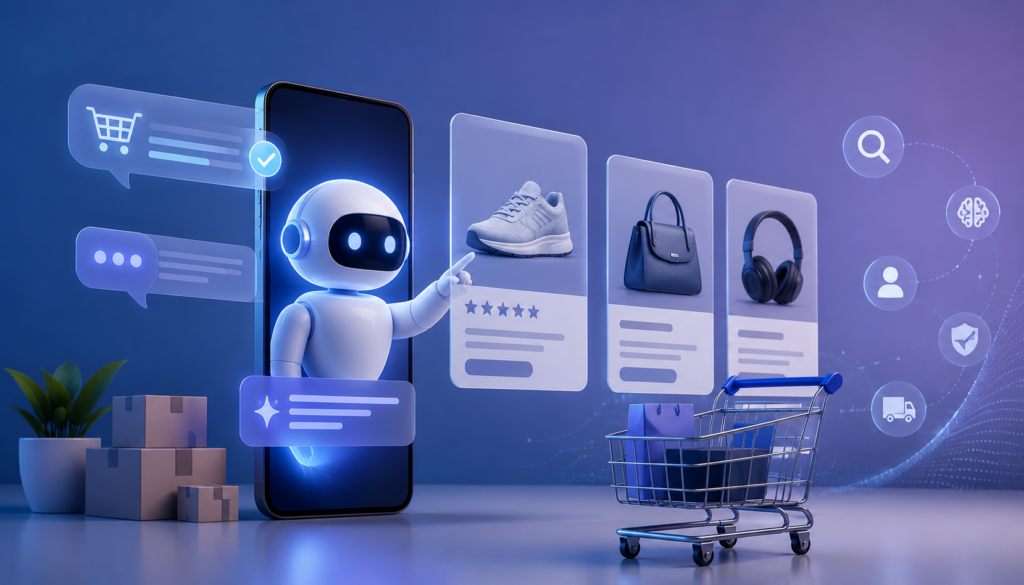
Agentic commerce is changing how shoppers discover, compare, and buy products online. Instead of searching manually, clicking through multiple websites, and comparing product pages themselves, shoppers can increasingly ask AI assistants to recommend products, compare options, summarize details, and even help complete purchases.
For ecommerce brands, this creates a new growth opportunity and a new measurement challenge.
If AI shopping agents influence discovery and purchase decisions, brands need to understand which products are being surfaced, which channels created demand, which customers convert, and how those customers behave after purchase.
AdBeacon helps ecommerce brands, agencies, and media buyers prepare for this shift by using first-party attribution, real-time analytics, actionable insights, and performance tracking to connect marketing activity to actual revenue outcomes.
What Is Agentic Commerce?
Agentic commerce is a model of ecommerce where AI agents help consumers shop by researching products, comparing options, making recommendations, and in some cases completing purchases on behalf of the shopper. Shopify describes agentic commerce as a new model where AI agents can shop on behalf of consumers by researching products, comparing options, and completing purchases autonomously.
This is different from traditional ecommerce search. In a traditional journey, the shopper does most of the work. They search, filter, compare, read reviews, click ads, visit websites, and make the final choice.
In an agentic commerce journey, the AI assistant may become part of the decision-making process. A shopper may ask:
- “What is the best travel backpack under $150?”
- “Compare these skincare products for sensitive skin.”
- “Find a gift for a new parent that ships by Friday.”
- “Which running shoes are best for flat feet?”
- “Buy the lowest-priced option from a trusted seller.”
That means e-commerce brands are no longer optimizing only for human shoppers. They also need to make their products understandable, trusted, and selectable by AI systems.
Why AI Shopping Agents Are Getting So Much Attention
AI shopping agents are getting attention because major platforms are actively building shopping experiences around AI-assisted discovery and purchase behavior.
Shopify published guidance on how merchants can sell through ChatGPT, AI Mode in Google Search, and Copilot, describing agentic commerce as the next evolution of online shopping where AI agents help consumers browse and shop.
Google’s Universal Commerce Protocol is designed to help turn AI interactions into instant sales, with support for agentic actions on Google AI Mode and Gemini starting with direct buying.
OpenAI has also introduced richer shopping experiences in ChatGPT, noting that more people are starting their shopping in ChatGPT to explore, compare, and decide what to buy.
The message for e-commerce brands is clear: AI shopping is moving from concept to commerce infrastructure.
This does not mean every purchase will happen through an AI agent tomorrow. But it does mean product discovery, comparison, and checkout behavior are changing.
How AI Shopping Agents Change the Ecommerce Journey
AI shopping agents can compress and reshape the ecommerce funnel. Instead of a shopper moving from ad to landing page to product page to checkout, the AI assistant may handle parts of the journey before the shopper reaches the brand’s site.
A future shopping journey may look like this:
- A shopper asks an AI assistant for product recommendations.
- The AI assistant compares product feeds, reviews, prices, availability, and shipping options.
- The AI assistant recommends a shortlist.
- The shopper asks follow-up questions.
- The AI assistant sends the shopper to checkout or completes part of the transaction.
- The brand sees a purchase, but may have less visibility into the discovery path.
This creates a new attribution problem.
The brand may know that a sale happened, but it may not know how much influence came from paid ads, organic content, AI search, product data, reviews, prior brand awareness, email, social media, or marketplace exposure.
That is why first-party attribution becomes more important as AI shopping grows.
The Attribution Problem With Agentic Commerce
Agentic commerce creates an attribution gap because the AI assistant may become an invisible middle layer between the customer and the brand.
In a traditional paid media journey, an ecommerce team can often track a click, session, add to cart, checkout, and purchase. In an AI-assisted journey, the customer may receive product recommendations before ever visiting the store.
That means the brand needs to answer new questions:
- Did the customer discover the product through AI search?
- Did paid media create the demand before the AI-assisted purchase?
- Which product data helped the AI assistant recommend the product?
- Which products are being selected, compared, or ignored by AI systems?
- Which customers came from AI-assisted journeys?
- Do AI-referred customers have higher or lower lifetime value?
- How does AI-driven traffic compare to Meta, Google, TikTok, Amazon, email, and direct traffic?
Platform reporting alone will not answer all of these questions.
E-commerce brands need first-party data that connects actual store behavior, customer records, product performance, and revenue outcomes.
Why Product Data Becomes a Growth Strategy
In agentic commerce, product data is not just operational information. It becomes part of the marketing engine.
AI shopping agents need structured, accurate, and trustworthy product information to make recommendations.
That includes product names, descriptions, pricing, availability, sizes, variants, reviews, shipping details, return policies, images, category information, and use cases.
Google’s Universal Commerce Protocol documentation emphasizes the role of AI interactions turning into sales and highlights agentic actions such as direct buying through Google AI Mode and Gemini.
Shopify’s executive guidance for agentic commerce also advises brands to get agentic-ready by fixing product data, improving AI discoverability, and capturing AI-driven traffic and sales.
For ecommerce brands, this creates a practical rule:
If an AI system cannot understand your product, it is less likely to recommend it.
What Ecommerce Brands Need to Make AI Shopping Agents Work
To prepare for AI shopping agents, ecommerce brands need more than product feeds. They need clean data, strong measurement, and a clear view of how marketing creates demand across channels.
1. Clean product data
AI agents need accurate product information. Product titles, descriptions, attributes, images, prices, availability, and policies should be structured and consistent.
2. Strong first-party tracking
Brands need to know what happens when shoppers arrive, convert, and return. First-party data helps brands understand real customer behavior instead of relying only on platform-reported metrics.
3. Revenue-based attribution
AI-assisted journeys may not always look like traditional paid clicks. Ecommerce teams need attribution that connects marketing activity to real purchases, customer value, and revenue impact.
4. Product-level performance reporting
AI shopping agents often recommend specific products, not just brands. Teams need to know which products drive profitable acquisition, repeat purchase, higher order value, and stronger lifetime value.
5. Channel overlap visibility
A customer may see a Meta ad, watch a TikTok creator, search on Google, ask ChatGPT for recommendations, and purchase later. Brands need a way to understand how these channels interact.
6. Customer quality analysis
Not all AI-assisted sales will be equally valuable. Brands need to track new customer rate, repeat purchase rate, average order value, customer lifetime value, returns, discounts, and profitability.
Why First-Party Data Matters More in Agentic Commerce
First-party data is the foundation for understanding ecommerce performance in an AI-assisted shopping environment.
As AI agents influence discovery, brands may lose visibility into parts of the customer journey. But they can still control and measure what happens in their own ecommerce ecosystem: purchases, product behavior, customer records, order value, repeat purchases, and retention.
That is where AdBeacon fits.
AdBeacon is a first-party attribution and optimization platform for e-commerce brands, agencies, and media buyers that need clearer visibility into campaign performance, customer journeys, and revenue impact across paid channels.
With first-party data, real-time analytics, AI insights, creative performance tracking, and e-commerce reporting, AdBeacon helps teams understand what is actually driving profitable growth.
How AdBeacon Helps E-commerce Brands Prepare for Agentic Commerce
AdBeacon helps ecommerce brands move from platform-only reporting to a more reliable first-party measurement foundation.
For agentic commerce, this matters because AI shopping agents may make attribution more complex. Brands will need better answers to questions like:
- Which campaigns created demand before an AI-assisted purchase?
- Which products are gaining traction across paid, organic, and AI-driven discovery?
- Which customers are new versus returning?
- Which channels are driving high-value buyers?
- Which creatives and messages are creating profitable customer journeys?
- Which products should receive more paid media support?
- Which campaigns are driving revenue that platform dashboards may not fully explain?
AdBeacon gives ecommerce teams the data layer they need to interpret these shifts more accurately.
Instead of relying only on Meta, TikTok, Google, Amazon, Shopify, or AI platform reporting in isolation, brands can use AdBeacon to connect first-party ecommerce data with campaign performance and revenue outcomes.

Agentic commerce does not replace traditional ecommerce attribution. It adds another layer of complexity.
What Ecommerce Brands Should Track as AI Shopping Grows
Ecommerce teams should begin preparing now by tracking the signals that will matter most in AI-assisted shopping journeys.
AI-referred traffic
Track traffic that comes from AI search experiences, chat interfaces, shopping assistants, and AI-powered discovery platforms when referral data is available.
Product-level conversion
AI agents often recommend specific products. Brands should know which products convert best, which drive repeat purchases, and which create profitable acquisition.
New customer rate
AI shopping may introduce the brand to new shoppers. Track whether AI-assisted discovery is actually acquiring new customers or mostly converting people who already know the brand.
Repeat purchase behavior
The first purchase is only part of the story. Brands need to know whether AI-referred customers come back, buy again, and increase lifetime value.
Creative and content influence
AI recommendations may be influenced by product information, reviews, content, brand authority, and demand signals. Track which messages, ads, and content assets appear to support conversion.
Channel overlap
AI shopping does not exist in isolation. Track how AI-assisted journeys overlap with Meta, TikTok, Google, Amazon, email, affiliates, and direct traffic.
Profitability
AI-assisted revenue should still be evaluated against margin, discounts, returns, shipping costs, acquisition costs, and customer lifetime value.
Common Mistakes Brands Should Avoid
Mistake 1: Treating AI shopping as only a technology trend
Agentic commerce is not just an AI feature. It is a change in how shoppers discover products and how brands may need to compete for recommendations.
Mistake 2: Ignoring product data quality
Poor product data can make products harder for AI systems to understand, compare, or recommend. Product data should be treated as a growth asset.
Mistake 3: Measuring only last-click conversions
AI shopping journeys may not produce clean last-click paths. Brands need a broader attribution model that includes first-party customer and revenue data.
Mistake 4: Assuming AI-referred traffic is automatically high quality
AI shopping agents may create new traffic, but brands still need to evaluate conversion rate, average order value, repeat purchase behavior, and profitability.
Mistake 5: Keeping paid media, product, and retention data separate
Agentic commerce connects discovery, product selection, checkout, and customer value. Ecommerce teams need reporting that brings those signals together.
How Agencies Can Use Agentic Commerce as a Client Strategy Opportunity
For agencies, agentic commerce creates a new advisory opportunity. Clients will need help understanding how AI shopping affects discovery, tracking, reporting, product feeds, paid media, and conversion strategy.
Agencies can guide clients by asking:
- Is the product catalog structured for AI discovery?
- Are product descriptions clear and complete?
- Are reviews, FAQs, policies, and product attributes easy to parse?
- Are we tracking traffic from AI shopping experiences?
- Do we know which products create profitable customers?
- Are we comparing AI-driven traffic to paid media channels?
- Are we using first-party attribution to validate performance?

AdBeacon helps agencies turn these questions into measurable reporting and optimization workflows. That makes it easier to move beyond surface-level AI trends and focus on revenue impact.
Best Practices for Getting Agentic-Commerce Ready
1. Clean up your product catalog
Make sure product titles, descriptions, attributes, variants, availability, pricing, images, and policies are accurate and structured.
2. Strengthen first-party attribution
Use first-party ecommerce data to understand what actually drives revenue, not just what each platform reports.
3. Build content that answers buyer questions
AI assistants often summarize and compare. Product pages, FAQs, buying guides, comparison pages, and educational content should clearly answer real shopping questions.
4. Track product performance by customer value
Do not measure products only by sales volume. Track profitability, repeat purchase behavior, and customer lifetime value.
5. Connect paid media to product demand
Paid ads may influence shoppers before they ask an AI assistant for recommendations. Use attribution to understand how campaigns create demand across the full journey.
6. Watch AI search and referral patterns
As AI shopping traffic becomes more visible, monitor how it performs compared to other channels.
7. Use reporting that can handle fragmented journeys
Agentic commerce will make ecommerce journeys less linear. Brands need reporting that connects campaigns, customers, products, and revenue in one view.
What This Means for the Future of Ecommerce Growth
The rise of agentic commerce means ecommerce brands will need to optimize for three audiences at once:
- Human shoppers
- Ad platforms
- AI shopping agents
Human shoppers need persuasive content, trust signals, product clarity, and a smooth buying experience.
Ad platforms need clean conversion signals, accurate event data, and enough feedback to optimize campaigns.
AI shopping agents need structured product data, clear product information, reliable availability, competitive offers, and trusted signals that help them compare and recommend.
Brands that can support all three will be better positioned to win in the next phase of ecommerce.
Final Takeaway
Agentic commerce and AI shopping agents are changing ecommerce discovery. Shoppers are beginning to use AI assistants to explore products, compare options, and make purchase decisions. Platforms like Shopify, Google, and OpenAI are already building commerce experiences around this shift.
For ecommerce brands, the biggest opportunity is not simply being present in AI shopping experiences. It is understanding whether those experiences create profitable growth.
AdBeacon helps ecommerce teams prepare for this future with first-party attribution, real-time analytics, AI insights, and performance tracking that connect marketing activity to actual revenue outcomes.
Ready to prepare your ecommerce measurement strategy for AI shopping agents?
Book a demo with AdBeacon to see how first-party attribution, real-time analytics, actionable insights, and performance tracking can help your team understand what is actually driving revenue.
Catalog ads are built for scale. First-party attribution helps ensure that scale is profitable.
Common Meta Catalog Ad Mistakes
Mistake 1: Scaling based only on platform ROAS
Meta ROAS is useful, but it should be validated against first-party revenue, margin, product performance, and customer quality.
Mistake 2: Letting the catalog feed go stale
Catalog ads depend on product data. Inaccurate prices, missing images, weak product names, unavailable inventory, or poor descriptions can limit performance.
Mistake 3: Ignoring product-level profitability
Some products may drive sales but weak margin. Others may drive fewer purchases but stronger lifetime value. Treat products differently based on business impact.
Mistake 4: Treating Shop visitors the same as website visitors
Shop visitors may show intent, but their behavior can differ from website visitors. Measure how each audience performs before scaling retargeting spend.
Mistake 5: Overlooking creative quality
Automation can crop or adapt images, but it cannot guarantee that the product image, angle, offer, or message is persuasive.
Mistake 6: Measuring catalog ads in isolation
Meta catalog ads often interact with Google, TikTok, Amazon, email, affiliates, and direct traffic. Brands need a broader attribution view to avoid overcrediting one channel.
How Agencies Can Use Catalog Attribution to Improve Client Reporting
For agencies, Meta catalog automation can create reporting tension. Clients may see strong Meta performance but still ask why total revenue, margin, or new customer growth is not improving at the same rate.
Agencies need to show more than platform screenshots.
A stronger catalog ad report should answer:
- Which products drove revenue?
- Which products drove profit?
- Which campaigns acquired new customers?
- Which campaigns mostly retargeted existing customers?
- Which Shop visitor audiences performed best?
- Which creative formats helped conversion?
- Which products should receive more budget?
- Which products should be excluded or deprioritized?
- How does Meta catalog performance compare to other channels?
AdBeacon helps agencies connect Meta catalog activity to first-party ecommerce outcomes, making client reporting clearer, more credible, and more actionable.
Best Practices for Meta Advantage+ Catalog Ads
1. Keep your product catalog clean
Make sure product titles, images, prices, variants, availability, descriptions, and product categories are accurate and updated.
2. Use first-party attribution to validate performance
Do not rely only on Meta-reported conversions. Compare catalog performance against actual ecommerce revenue, customer behavior, and product-level results.
3. Evaluate products by profit, not just sales
A product that sells frequently may still be a weak scaling candidate if margin is low or return rates are high.
4. Separate new and returning customers
Measure whether catalog ads are driving acquisition, retention, or both. Each outcome deserves a different optimization strategy.
5. Monitor Shop visitor audience quality
If Shop visitors are part of retargeting audiences, evaluate them separately from website visitors, add-to-cart audiences, and purchasers.
6. Test creative formats by placement
Feed, Reels, and Stories behave differently. Review how automated image touch-ups and placement-specific formats affect performance.
7. Connect catalog ads to inventory data
Do not scale ads for products with limited inventory, weak margins, or supply issues. Product-level marketing should be connected to operational reality.
8. Use catalog insights to guide merchandising
Catalog ad data can reveal which products are attracting demand. Use that insight to inform bundles, offers, landing pages, and inventory planning.
What This Means for the Future of Ecommerce Advertising
Meta’s catalog and Shops updates point toward a more connected commerce ecosystem. Product catalogs, Shops, website audiences, automated creative formatting, and AI-powered delivery are becoming more tightly linked.
For ecommerce brands, this means the future of Meta advertising will depend on three things:
- Better product data
- Better conversion signals
- Better first-party attribution
The brands that win will not simply upload a catalog and let automation run. They will use automation to scale delivery while using first-party data to guide strategy.
Final Takeaway
Meta Advantage+ Catalog Ads and Shops updates are making ecommerce advertising more dynamic and automated. Automatic image touch-ups can help product ads fit more placements, while expanded audience possibilities around Shop visitors may give brands more ways to retarget high-intent shoppers.
But automation does not remove the need for measurement. It increases it.
Ecommerce brands need to know which catalog ads are driving actual revenue, which products are profitable, which customers are new, which audiences are valuable, and which campaigns deserve more budget.
Ready to understand which Meta catalog campaigns, products, and audiences are actually driving profitable ecommerce growth?
Book a demo with AdBeacon to see how first-party attribution, real-time analytics, actionable insights, and performance tracking can help your team scale smarter.
FAQs About Agentic Commerce and AI Shopping Agents
What is agentic commerce?
Agentic commerce is ecommerce where AI agents help shoppers research, compare, recommend, and sometimes purchase products. It allows AI systems to play a more active role in the shopping journey.
What is an AI shopping agent?
An AI shopping agent is an AI assistant that helps shoppers find products, compare options, evaluate details, and make buying decisions. Some AI shopping agents may also help complete transactions.
Why does agentic commerce matter for e-commerce brands?
Agentic commerce matters because it changes how products are discovered and selected. Brands may need to optimize product data, attribution, content, and checkout experiences for AI-assisted shopping journeys.
How does agentic commerce affect attribution?
Agentic commerce can make attribution more complex because AI assistants may influence purchase decisions before the customer reaches the brand’s website. Brands need first-party data to understand actual revenue, customer behavior, and channel impact.
What data do AI shopping agents need?
AI shopping agents need accurate product data, pricing, availability, descriptions, variants, reviews, shipping information, return policies, and category details to compare and recommend products effectively.
How can ecommerce brands prepare for AI shopping agents?
Brands can prepare by improving product data, strengthening first-party attribution, building helpful product and FAQ content, tracking AI-referred traffic, and measuring customer quality after purchase.
Why is first-party data important for agentic commerce?
First-party data helps brands understand what happens after a shopper reaches the store or completes a purchase. It provides visibility into revenue, products, customers, repeat purchases, and lifetime value.
How does AdBeacon help with agentic commerce?
AdBeacon helps e-commerce brands and agencies use first-party attribution, real-time analytics, AI insights, and performance tracking to understand which campaigns, channels, products, and customers are driving revenue in increasingly complex shopping journeys.