TikTok Shop as a Major Retail Channel: How E-commerce Brands Should Measure Growth Beyond Social Engagement
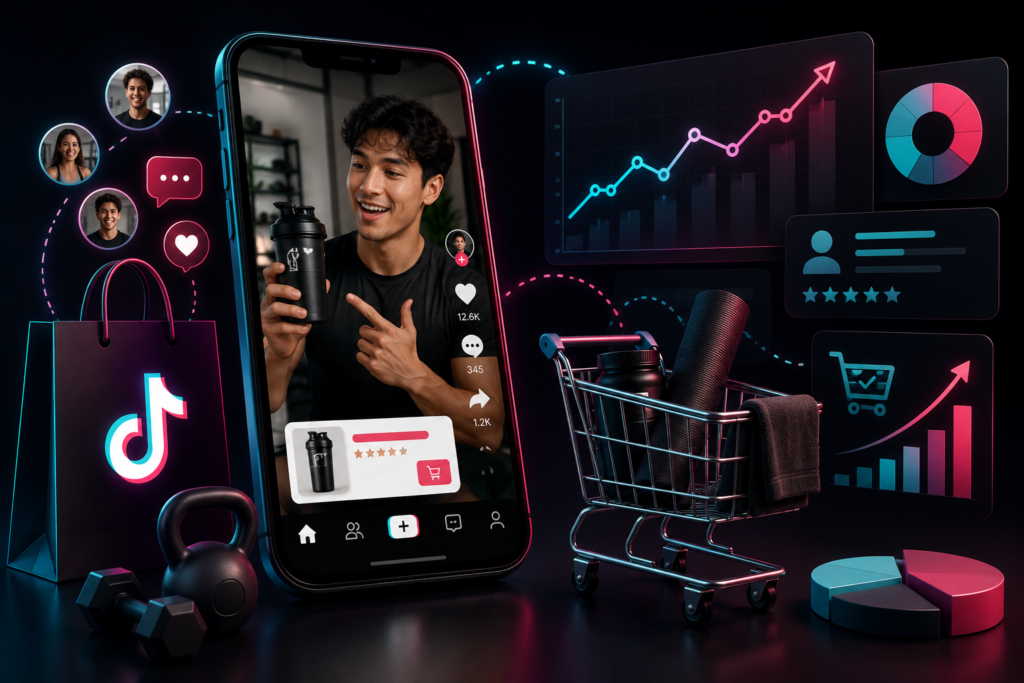
TikTok Shop is no longer just an experimental social commerce channel. It is becoming a major retail channel where ecommerce brands can drive discovery, creator-led trust, product education, in-app checkout, and measurable sales in one environment.
Recent retail coverage shows why brands are paying attention. The Wall Street Journal reported that major retailers including Ralph Lauren, Ulta Beauty, and Olaplex have launched TikTok Shop storefronts, and that TikTok Shop generated $4.9 billion in U.S. sales in Q1 2026.
The same report noted that ThredUp sold more than 100,000 Clean Out Kits in two weeks, with 98 percent of buyers being new customers.
For e-commerce brands, the opportunity is clear: TikTok Shop can drive real customer acquisition and revenue. But to scale it profitably, brands need more than platform dashboards, creator engagement, and GMV.
They need first-party attribution, real-time analytics, actionable insights, and performance tracking that connect TikTok Shop activity to actual customer behavior, product performance, and long-term value.
AdBeacon helps e-commerce brands, agencies, and media buyers understand what is actually driving revenue across fragmented paid media and social commerce journeys.
What Is TikTok Shop?
TikTok Shop is TikTok’s in-app ecommerce marketplace that allows users to discover and buy products directly through TikTok. Shoppers can purchase through shoppable videos, livestreams, product cards, creator affiliate posts, Shop tabs, and in-app checkout.
This changes the traditional ecommerce path. Instead of sending every shopper from a social ad to an external website, TikTok Shop lets brands turn content into commerce inside the same platform.
A TikTok Shop journey can include:
- A creator demonstrating a product
- A user reading comments for social proof
- A shopper clicking a product tag
- TikTok showing related products
- An affiliate creator earning commission
- A brand boosting the content through paid ads
- The customer checking out without leaving TikTok

That combination is why TikTok Shop is being discussed as a serious retail channel, not just another social media feature.
Why TikTok Shop Is Becoming a Major Retail Channel
TikTok Shop is growing because it brings together product discovery, entertainment, creator influence, and checkout. That is a powerful combination for ecommerce brands that sell products people need to see, understand, trust, or experience before buying.
EMARKETER reported that TikTok Shop sales rose 84 percent between March 2025 and February 2026, based on NielsenIQ data.
The same article noted that TikTok Shop generated more than $1.3 billion in sales during the final two months of the year.
EMARKETER has also projected that U.S. TikTok Shop sales will rise 48 percent year over year to $23.41 billion in 2026, making TikTok Shop’s U.S. ecommerce business larger than the individual online businesses of Target, Costco, Best Buy, and Kroger.
That level of growth changes how ecommerce teams should think about TikTok Shop. It is not only a place to test viral content. It is a commerce channel that needs strategy, measurement, attribution, inventory planning, and profitability analysis.
Why TikTok Shop Works for Ecommerce Discovery
TikTok Shop works because it reduces the distance between interest and purchase.
In traditional ecommerce, a shopper may need to:
- See an ad
- Leave the social app
- Land on a website
- Browse a product page
- Read reviews
- Add to cart
- Complete checkout
On TikTok Shop, much of that journey can happen inside the TikTok experience. The creator explains the product. Comments provide social proof. Product tags reduce friction. In-app checkout makes the purchase easier.
That structure is especially useful for products that benefit from demonstration or social validation, such as:
- Beauty products
- Apparel
- Accessories
- Home goods
- Wellness products
- Food and beverage
- Gadgets
- Fitness products
- Lifestyle products
- Giftable products
TikTok Shop is not just capturing existing demand. It can create demand through content.
The Role of Creators in TikTok Shop Growth
Creators are one of the biggest reasons TikTok Shop is becoming a major retail channel. A creator can explain a product in a way that feels more native, specific, and trustworthy than a traditional ad.
Creator content can help ecommerce brands:
- Introduce products to new audiences
- Demonstrate how products work
- Answer objections
- Create social proof
- Build trust through authenticity
- Generate content that can be used in paid media
- Drive direct sales through affiliate links
- Support livestream selling
- Test product angles quickly
- Expand reach without relying only on brand-owned content

But creator performance should not be measured by views or follower count alone. The best creators for TikTok Shop are the creators who drive the right customers, not just the most attention.
Brands need to measure creator performance by revenue, new customer rate, average order value, return rate, repeat purchase behavior, product mix, and customer lifetime value.
Why GMV Is Useful but Incomplete
Gross merchandise value, or GMV, is one of the most visible TikTok Shop metrics. It shows the total value of products sold through the channel.
GMV matters because it helps brands understand sales volume. But GMV does not show whether those sales were profitable.
A TikTok Shop campaign can generate strong GMV while still creating problems if it depends on:
- Heavy discounts
- Low-margin products
- High creator commissions
- Paid amplification costs
- Expensive shipping
- High return rates
- Low repeat purchase behavior
- Poor customer quality
- Inventory strain
- Cross-channel cannibalization
For ecommerce brands, GMV should be the beginning of the analysis, not the end.
The better question is: did TikTok Shop create profitable customers worth acquiring again?
What Is GMV Max?
GMV Max is TikTok Shop’s automated advertising solution. TikTok’s business help documentation says Product GMV Max optimizes for a TikTok Shop’s total channel ROI and automates ads by using available creative assets to create ads, set campaign settings, and optimize organic delivery and paid ad traffic to achieve incremental GMV.
TikTok also says that, starting July 2025, GMV Max became the default and only supported campaign type for TikTok Shop Ads when using the Sales objective with TikTok Shop as the sales destination.
This matters because TikTok Shop advertising is becoming more automated. The platform is taking more control over how ads are built, how traffic is allocated, and how GMV is optimized.
Automation can help brands scale faster. But brands still need independent measurement to understand whether automation is creating profitable business outcomes.
The Measurement Challenge With TikTok Shop
TikTok Shop blends organic content, creator affiliates, paid ads, product discovery, livestreams, and in-app checkout. That makes attribution complicated.
A single customer journey might include:
- Watching a creator video
- Seeing a paid Spark Ad
- Visiting the TikTok Shop storefront
- Reading comments
- Clicking a product card
- Leaving without buying
- Seeing a Meta retargeting ad
- Searching on Google
- Purchasing later through Shopify
- Returning later through email or SMS
In that journey, TikTok Shop may have created demand even if the final purchase happened somewhere else. The reverse can also happen. A purchase may happen inside TikTok Shop after prior exposure to Meta, Google, email, or a brand’s owned site.
That is why ecommerce teams need first-party attribution. Platform data is useful, but it does not always explain the complete customer journey.
What E-commerce Brands Should Track for TikTok Shop
To treat TikTok Shop like a major retail channel, brands need to track business outcomes, not just social activity.
New customer acquisition
TikTok Shop can be powerful for reaching new buyers. Brands should track whether TikTok Shop is actually acquiring new customers or mostly converting people who already know the brand.
Net revenue
GMV shows sales volume, but net revenue gives a clearer picture after discounts, cancellations, and adjustments.
Contribution margin
Brands need to account for product costs, shipping, discounts, creator commissions, ad spend, platform fees, returns, and refunds.
Average order value
AOV helps brands understand order quality. Some TikTok Shop campaigns may drive high volume but low order value, while others support bundles or higher-value products.
Product-level performance
TikTok Shop is often product-led. Brands should know which products drive revenue, margin, repeat purchase behavior, and customer value.
Creator-level performance
Creators should be measured by the customers and revenue they create, not only by reach or engagement.
Repeat purchase rate
A TikTok Shop customer who comes back is more valuable than a one-time buyer. Repeat purchase behavior helps brands measure customer quality.
Return and refund rate
Returns can change campaign economics. If a creator or product drives high refunds, the campaign may need a different message or audience.
Customer lifetime value
LTV helps brands understand whether TikTok Shop customers become long-term buyers.
Cross-channel overlap
TikTok Shop should be measured alongside Shopify, Meta, Google, Amazon, email, SMS, affiliates, and direct traffic.
How AdBeacon Helps Brands Measure TikTok Shop as a Retail Channel
AdBeacon helps ecommerce brands, agencies, and media buyers move beyond platform-only reporting by connecting marketing activity to first-party ecommerce outcomes.
For TikTok Shop, AdBeacon helps teams answer questions like:
- Which TikTok Shop campaigns are driving actual revenue?
- Which creators are acquiring high-quality customers?
- Which products are worth scaling?
- Which campaigns are producing new customers?
- Which TikTok-driven buyers return later?
- Which creative assets should receive more paid budget?
- Which products are profitable after costs and returns?
- Which channels are overlapping with TikTok Shop?
- Which platform-reported wins are supported by first-party data?
- Which campaigns should be scaled, paused, or restructured?
AdBeacon gives ecommerce teams a clearer view of performance across paid media and store-side data so TikTok Shop can be managed like a serious growth channel.
TikTok Shop vs Traditional E-commerce Channels

TikTok Shop can drive powerful discovery. Owned ecommerce systems help brands understand and retain customers. The best strategy connects both.
TikTok Shop and Inventory Planning
TikTok Shop can create sudden demand spikes. That is good when inventory is ready. It is risky when a product runs out of stock or has weak fulfillment economics.
Brands should connect TikTok Shop planning to inventory data.
Before scaling a product, teams should ask:
- Do we have enough inventory?
- Is the product margin strong enough?
- Can fulfillment handle a demand spike?
- Are variants and sizes available?
- Are we promoting products that support repeat purchases?
- Should this product be bundled?
- Should ad spend be shifted away from low-stock items?
- Are returns likely to create margin pressure?
AdBeacon’s Inventory Intelligence helps ecommerce teams connect Shopify data to smarter advertising decisions, making it easier to align product demand with media spend.
TikTok Shop and Customer Lifetime Value
The first sale matters, but long-term customer value matters more.
TikTok Shop can be a strong acquisition channel if customers return, buy again, and develop a relationship with the brand. But if TikTok Shop customers only buy once because of a discount or creator push, the channel may be less profitable than it appears.
Brands should track TikTok Shop customers after the first purchase.
Key questions include:
- Do TikTok Shop customers buy again?
- How long does it take them to make a second purchase?
- Which products lead to repeat behavior?
- Which creators drive better LTV?
- Do TikTok Shop customers join email or SMS?
- Do they later purchase through Shopify?
- Are they more or less profitable than customers from Meta, Google, Amazon, or direct traffic?
AdBeacon helps ecommerce teams evaluate customer value so TikTok Shop decisions are based on more than first-order sales.
Common Mistakes Brands Make With TikTok Shop
Mistake 1: Treating TikTok Shop as a side experiment
TikTok Shop’s growth shows that it deserves real strategy, measurement, and operational planning.
Mistake 2: Measuring only GMV
GMV does not account for margin, discounts, commissions, returns, ad spend, or customer quality.
Mistake 3: Choosing creators by follower count
Follower count does not guarantee sales quality. Brands should measure creators by revenue, customer quality, and repeat purchase behavior.
Mistake 4: Ignoring cross-channel influence
TikTok Shop may create demand that converts elsewhere, and other channels may influence purchases that happen inside TikTok Shop.
Mistake 5: Scaling without inventory visibility
A viral product can create fulfillment problems if inventory is not aligned with campaign spend.
Mistake 6: Treating social engagement as business impact
Views, likes, comments, and shares are useful signals, but they do not prove profitable growth.
Best Practices for Treating TikTok Shop Like a Major Retail Channel
1. Build a channel strategy
Define TikTok Shop’s role in your growth mix. Decide whether it is primarily for acquisition, product testing, creator commerce, retention, or direct sales.
2. Measure creators like performance partners
Evaluate creators by revenue, customer quality, AOV, return rate, repeat purchase behavior, and paid amplification potential.
3. Track products individually
Know which products perform best by margin, inventory, conversion rate, repeat purchase potential, and customer value.
4. Use GMV Max with first-party validation
GMV Max can help automate growth, but brands should compare platform results against first-party revenue, margin, and customer data.
5. Connect TikTok Shop to your owned ecommerce data
TikTok Shop should not sit in a silo. Connect it to Shopify, paid media reporting, customer behavior, product performance, and retention data.
6. Separate new and returning customers
TikTok Shop can drive acquisition, but brands need to prove whether customers are truly new or already familiar with the brand.
7. Watch inventory before scaling
Connect product promotion to inventory availability so paid spend does not create demand the brand cannot fulfill.
8. Optimize for long-term value
Measure repeat purchases, LTV, retention, and profitability, not just first-order GMV.
What This Means for Agencies and Media Buyers
Agencies and media buyers should treat TikTok Shop as a performance channel with its own operating model.
Clients will want to know:
- Is TikTok Shop worth scaling?
- Which creators should we keep?
- Which products should we push?
- Are TikTok Shop customers new?
- Are these sales profitable?
- How does TikTok Shop compare to Shopify, Meta, Google, and Amazon?
- Are GMV Max campaigns driving good customers?
- Which creative assets should we amplify?
- Where is the channel creating incremental demand?
AdBeacon helps agencies and media buyers answer these questions with clearer reporting, first-party attribution, real-time analytics, and performance tracking that connect TikTok Shop activity to actual ecommerce outcomes.
Final Takeaway
TikTok Shop is becoming a major retail channel because it combines discovery, creators, content, product education, social proof, ads, and checkout in one experience. Its growth is attracting both DTC brands and major retailers, and the channel is becoming too large to treat as a simple social experiment.
But TikTok Shop growth should not be measured by GMV or engagement alone.
To scale profitably, e-commerce brands need to understand which creators, products, campaigns, and customers are driving real revenue and long-term value. AdBeacon helps brands, agencies, and media buyers connect TikTok Shop activity to first-party e-commerce data so they can make smarter decisions about budget, creative, inventory, and growth.
Ready to measure TikTok Shop like a true retail channel?
Book a demo with AdBeacon to see how first-party attribution, real-time analytics, actionable insights, inventory intelligence, and performance tracking can help your team understand what is actually driving e-commerce revenue.
FAQs About TikTok Shop as a Retail Channel
Is TikTok Shop a major e-commerce channel?
Yes. TikTok Shop is becoming a major ecommerce channel. EMARKETER projected U.S. TikTok Shop sales will reach $23.41 billion in 2026, up 48 percent year over year.
Why is TikTok Shop growing so fast?
TikTok Shop is growing because it combines content discovery, creator influence, social proof, product education, and in-app checkout. This reduces friction between seeing a product and buying it.
What is GMV on TikTok Shop?
GMV stands for gross merchandise value. It measures the total value of products sold through TikTok Shop. GMV is useful for sales volume, but it does not show profitability by itself.
What is GMV Max?
Product GMV Max is TikTok Shop’s automated ad solution. TikTok says it optimizes for total channel ROI by using available creative assets and optimizing organic delivery plus paid traffic to achieve incremental GMV.
Should brands use TikTok Shop instead of Shopify?
Not necessarily. TikTok Shop can be strong for discovery and in-app conversion, while Shopify and owned ecommerce stores are important for data ownership, retention, product education, subscriptions, and lifetime value.
What should brands track beyond TikTok Shop GMV?
Brands should track net revenue, contribution margin, new customer rate, AOV, repeat purchase rate, return rate, product-level performance, creator-level performance, customer lifetime value, and cross-channel overlap.
Why does first-party attribution matter for TikTok Shop?
First-party attribution helps brands understand whether TikTok Shop sales are creating real business value. It connects TikTok activity to store-side revenue, customer behavior, product performance, and long-term outcomes.
How does AdBeacon help with TikTok Shop measurement?
AdBeacon helps e-commerce brands and agencies connect TikTok Shop, paid media, Shopify data, customer behavior, and product performance into a clearer attribution and optimization framework.