Meta Ads Signal Quality and Attribution: Why Better First-Party Data Helps E-commerce Brands Scale More Accurately
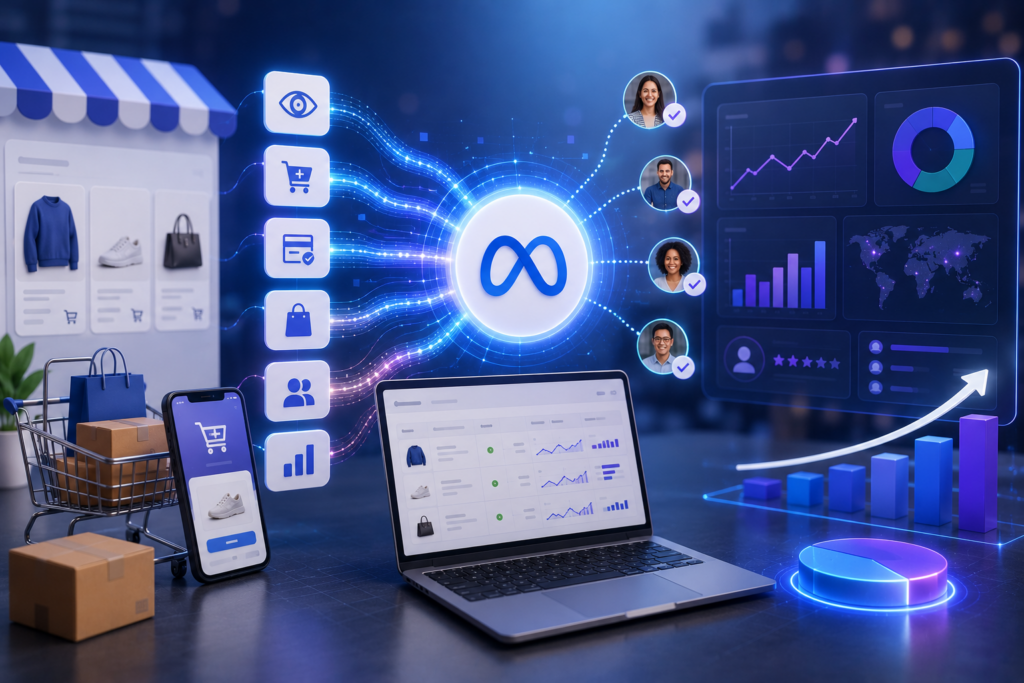
Meta Ads performance depends on the quality of the signals sent back to Meta. When ecommerce brands send accurate purchase events, add-to-cart events, checkout activity, order values, customer data, and product-level context, Meta has better information to optimize campaigns.
When those signals are missing, delayed, duplicated, or incomplete, media buyers may make decisions from unreliable data.
This is why Meta Ads signal quality and attribution accuracy have become major topics for e-commerce marketers. As Meta uses more AI and automation across campaign delivery, targeting, creative selection, and budget optimization, the data feeding those systems matters more than ever.
AdBeacon helps ecommerce brands, agencies, and media buyers improve performance visibility with first-party attribution, real-time analytics, server-side tracking, actionable insights, and e-commerce performance tracking.
With better first-party data, teams can understand which Meta campaigns are actually driving revenue, customer value, and profitable growth.
What Is Meta Ads Signal Quality?
Meta Ads signal quality refers to the accuracy, completeness, and usefulness of the conversion data Meta receives from advertisers. These signals help Meta understand which people are taking valuable actions after seeing or clicking ads.
For e-commerce brands, important Meta signals include:
- Product views
- Add-to-cart events
- Initiate checkout events
- Purchases
- Order values
- Customer identifiers
- Product IDs
- Event timestamps
- Event source
- Deduplication data
- New versus returning customer context
- Post-purchase customer behavior

Meta’s Conversions API is designed to create a connection between an advertiser’s marketing data, such as website events, app events, business messaging events, and offline events, and Meta systems.
This allows advertisers to send data directly from their server, website, app, CRM, or other business systems to Meta.
For e-commerce teams, signal quality matters because Meta’s optimization systems depend on the events they receive. Better signals can support better delivery, better attribution, and more informed optimization.
What Is Meta Attribution?
Meta attribution is the process Meta uses to connect ad interactions to conversion events. If a shopper sees, clicks, or engages with a Meta ad and later purchases, Meta may attribute that purchase to the campaign depending on the attribution setting, event data, and reporting model.
Meta attribution helps advertisers answer questions like:
- Which campaigns drove purchases?
- Which ad sets produced conversions?
- Which creatives contributed to revenue?
- Which audiences are responding?
- Which placements are working?
- Which campaigns should receive more budget?
The challenge is that Meta attribution is platform-specific. It shows how Meta reports performance inside Meta’s ecosystem. It does not always match Shopify, Google Analytics, TikTok, Amazon, or a first-party attribution system.
That does not mean Meta reporting is useless. It means ecommerce brands should use Meta reporting for campaign management while using first-party attribution to validate business impact.
Why Signal Quality Matters More as Meta Becomes More Automated
Meta’s ad ecosystem is becoming more automated through Advantage+ campaigns, AI-powered delivery, dynamic creative optimization, catalog ads, and automated audience expansion. Automation can help ecommerce brands scale faster, but it also increases dependence on data quality.
If Meta receives incomplete conversion signals, automation may optimize toward the wrong patterns.
For example:
- If purchase events are missing, Meta may not fully understand who is converting.
- If order values are inaccurate, Meta may optimize toward low-value customers.
- If duplicate events are counted, performance may look better than it really is.
- If add-to-cart events are missing, Meta may lose valuable mid-funnel intent signals.
- If customer identifiers are weak, Meta may have a harder time matching events to users.
- If product-level data is incomplete, catalog and product ads may be harder to optimize.
The more Meta automates campaign decisions, the more important it becomes for brands to send clean, accurate, and complete data.
Why Ecommerce Brands Struggle With Meta Attribution Accuracy
Ecommerce attribution is difficult because customer journeys are fragmented. A shopper might see a Meta ad, watch a TikTok creator, compare products on Google, visit the Shopify store, open an email, and later purchase after a retargeting ad.
Meta may attribute the purchase to a Meta campaign.
Google may claim influence from paid search. Shopify may show a different source. TikTok may show earlier social engagement. A first-party attribution platform may assign credit differently.
The issue is not that one dashboard is always right and the others are always wrong. The issue is that each platform has a different view of the customer journey.
Meta attribution can be affected by:
- Browser tracking limitations
- Privacy restrictions
- Ad blockers
- Pixel-only tracking gaps
- Missing server-side events
- Weak customer matching
- Duplicate events
- Inconsistent UTMs
- Attribution window changes
- Cross-device behavior
- In-app browsing behavior
- Returning customer bias
This is why ecommerce brands need first-party attribution that connects campaign performance to actual store-side outcomes.
What Is Event Match Quality?
Event Match Quality is Meta’s diagnostic that helps advertisers understand how well their conversion events can be matched to Meta accounts. Meta’s help documentation says Event Match Quality is available for website events sent through Conversions API with the action source set to Website.
The stronger the event match, the more useful the event can be for attribution and optimization. Event matching can be improved by sending complete and accurate customer information where permitted, such as email, phone number, name, location, IP address, browser ID, click ID, and other matching parameters.
For ecommerce brands, Event Match Quality matters because Meta needs to connect conversion events back to people who interacted with ads. If Meta cannot match enough events, reporting and optimization may suffer.
Meta Pixel vs Conversions API
Meta Pixel and Conversions API are both used to send event data to Meta, but they collect data differently.

Meta’s Conversions API is designed to connect advertiser marketing data directly to Meta systems. Industry guidance also commonly recommends using Conversions API alongside the Meta Pixel so brands can improve signal coverage and deduplicate events properly.
For ecommerce brands, the best setup is usually not pixel or server-side tracking. It is both, configured correctly.
Why Deduplication Matters
Deduplication prevents the same customer action from being counted twice when both the Meta Pixel and Conversions API send the same event.
For example, a customer completes a purchase. The browser pixel sends a purchase event. The server also sends a purchase event through Conversions API. If Meta does not recognize these as the same event, reporting may be inflated.
That can create serious problems:
- ROAS may look higher than it really is.
- Campaigns may receive too much credit.
- Automated optimization may learn from inflated data.
- Media buyers may scale the wrong campaigns.
- Client or executive reporting may become misleading.
Clean event IDs and proper deduplication help Meta understand that the browser event and server event represent the same customer action.
Why First-Party Data Matters for Meta Ads
First-party data is data collected directly from a brand’s own ecommerce store, customers, checkout, product interactions, and purchase history.
For Meta advertisers, first-party data helps strengthen both reporting and optimization. It allows teams to understand what happened in the business, not just what Meta reported.
First-party ecommerce data can show:
- Which customers purchased
- Which products were purchased
- Whether the customer was new or returning
- What the order value was
- Whether the customer returned later
- Whether the product was profitable
- Whether the purchase was refunded
- Which campaigns influenced the journey
- Which creatives attracted high-value buyers
- Which audiences deserve more budget
AdBeacon Tether enhances paid media performance by sending enriched first-party event data to ad platforms like Meta.
AdBeacon says Tether captures key website actions such as Purchase, Add to Cart, and Initiate Checkout using first-party tracking mechanisms, then enriches event data with Shopify insights such as order details, product categories, and customer demographics.
How AdBeacon Helps Improve Meta Ads Signal Quality and Attribution
AdBeacon helps ecommerce brands, agencies, and media buyers use first-party data to better understand Meta Ads performance.
For Meta advertisers, AdBeacon helps answer questions like:
- Which Meta campaigns are actually driving e-commerce revenue?
- Which campaigns are acquiring new customers?
- Which campaigns are converting returning buyers?
- Which creative assets are producing high-value customers?
- Which audiences are driving repeat purchase behavior?
- Which platform-reported results are supported by store-side data?
- Which products are profitable enough to scale?
- Which campaigns are wasting spend?
- Which events should be sent back to Meta for optimization?
- Which attribution windows give the most useful view of performance?

AdBeacon’s Facebook attribution tool is positioned for marketers operating in the post-iOS 14.5 world, where platform tracking and privacy changes have made accurate Meta measurement more difficult.
AdBeacon Tether also supports stronger optimization signals by capturing click-level and revenue-level first-party data and feeding it back into ad platforms with more precision.
AdBeacon describes this as helping provide clearer revenue attribution, more accurate event data, stronger optimization signals, and greater stability when scaling Advantage+ campaigns.
What Ecommerce Brands Should Track for Better Meta Attribution
Purchase accuracy
Make sure purchase events fire reliably and include accurate order value, currency, event ID, timestamp, and customer data where permitted.
Add-to-cart and checkout activity
Mid-funnel events help Meta understand customer intent before purchase. These events are especially useful when purchase volume is limited.
New versus returning customers
A campaign that converts existing customers should not be evaluated the same way as one that acquires new customers.
Product-level performance
Meta may optimize toward products that convert easily, but brands need to know which products are profitable, repeatable, and strategically important.
Average order value
A campaign with a higher purchase count may still be weaker if it drives lower-value orders.
Repeat purchase behavior
First-order ROAS does not show whether customers come back. Repeat purchase behavior helps identify better acquisition sources.
Customer lifetime value
LTV helps brands understand which Meta campaigns are building long-term customer value.
Returns and refunds
Refunds can change the true profitability of a Meta campaign. Brands should account for post-purchase outcomes.
Cross-channel overlap
Meta may influence a purchase that also involved Google, TikTok, Amazon, email, or direct traffic. Attribution should account for fragmented journeys.
The Difference Between Better Signals and Better Attribution
Better signals and better attribution are related, but they are not the same.
Better signals help Meta optimize. Better attribution helps the brand make smarter business decisions.

The strongest ecommerce brands invest in both. They send better data into Meta and use first-party attribution to evaluate what Meta is doing with that data.
How Poor Signal Quality Hurts Ecommerce Performance
Poor signal quality can make Meta campaigns harder to scale.
Common issues include:
- Purchase events not firing
- Missing order values
- Duplicate purchase events
- Weak Event Match Quality
- Missing add-to-cart data
- Missing checkout events
- Pixel-only tracking gaps
- Inconsistent UTMs
- Campaign naming problems
- Product IDs not matching catalog data
- Delayed server events
- Refunds ignored in performance analysis
These problems create bad inputs. Bad inputs lead to weak optimization and unreliable reporting.
For e-commerce brands spending meaningful budget on Meta, signal quality is not a technical side project. It is a performance lever.
Best Practices for Improving Meta Ads Signal Quality
1. Use both Meta Pixel and Conversions API
Pixel and server-side tracking can work together to improve event coverage. Make sure deduplication is configured correctly.
2. Send high-value e-commerce events
Purchases matter most, but add-to-cart and checkout events can help Meta understand earlier buying intent.
3. Include accurate revenue values
Order value should match the ecommerce transaction. Incorrect values can distort ROAS and automated optimization.
4. Improve Event Match Quality
Send complete and accurate customer data where permitted. Stronger matching can help Meta connect events to ad interactions.
5. Deduplicate events properly
Use consistent event IDs so Meta can recognize when browser and server events represent the same customer action.
6. Track product-level data
Product IDs, product categories, and order details help ecommerce teams understand what Meta campaigns are actually selling.
7. Separate acquisition from retention
New customer campaigns and returning customer campaigns should not be measured with the same expectations.
8. Monitor event health regularly
Tracking can break after site updates, checkout changes, app changes, theme changes, or tag manager edits.
9. Compare Meta reporting to first-party data
Do not expect every system to match perfectly. Look for meaningful differences and use first-party attribution to validate decisions.
10. Optimize for customer value, not just conversions
A low-cost conversion is not always a good customer. Track repeat purchase behavior, LTV, refunds, and profitability.
Common Meta Signal Quality Mistakes
Mistake 1: Relying only on the Meta Pixel
Browser-based tracking can miss events because of privacy settings, browser restrictions, and ad blockers. Server-side tracking helps improve reliability.
Mistake 2: Sending duplicate events
Duplicate events can inflate performance and mislead both reporting and optimization.
Mistake 3: Tracking purchases without revenue accuracy
A purchase event without the correct order value limits ROAS accuracy and weakens optimization.
Mistake 4: Ignoring Event Match Quality
If Meta cannot match events to users, attribution and optimization can become less reliable.
Mistake 5: Treating Meta Ads Manager as the only source of truth
Meta Ads Manager is useful for campaign management, but ecommerce brands need first-party attribution to validate actual business outcomes.
Mistake 6: Optimizing for purchases without customer quality
Not every purchase creates the same value. Brands need to track new customer rate, repeat purchase behavior, and LTV.
How Agencies Can Use Signal Quality as a Client Growth Advantage
Agencies managing ecommerce Meta accounts can use signal quality and first-party attribution as a strategic advantage.
Instead of only reporting Meta dashboard results, agencies can show:
- Which campaigns drove store-side revenue
- Which campaigns acquired new customers
- Which audiences produced repeat buyers
- Which creatives attracted higher-value customers
- Which products were profitable
- Which campaigns looked strong in Meta but weak in first-party data
- Which tracking improvements changed optimization quality
- Which budget decisions are supported by actual ecommerce outcomes
This makes reporting more credible and client conversations more productive.
AdBeacon helps agencies connect Meta performance to first-party ecommerce data, making it easier to defend strategy, identify wasted spend, and show what is really driving growth.
What This Means for the Future of Meta Ads
Meta Ads will continue moving toward more automation, more AI-led optimization, and more signal-dependent campaign delivery. That makes first-party data more valuable, not less valuable.
The future of Meta advertising will reward brands that can:
- Send clean e-commerce signals to Meta
- Improve Event Match Quality
- Use server-side tracking
- Deduplicate events correctly
- Validate results with first-party attribution
- Analyze product-level performance
- Separate acquisition from retention
- Optimize toward customer value
- Connect creative performance to revenue
- Make budget decisions with confidence
The brands that treat signal quality as a growth lever will have a stronger foundation for scaling Meta Ads profitably.
Final Takeaway
Meta Ads signal quality and attribution accuracy are now central to ecommerce growth. As Meta uses more automation and AI to optimize campaigns, the quality of conversion data becomes one of the biggest factors influencing performance.
Better signals help Meta optimize. Better first-party attribution helps ecommerce teams understand whether that optimization is creating profitable growth.
AdBeacon helps brands, agencies, and media buyers connect Meta campaign activity to first-party ecommerce data, including purchases, product performance, customer behavior, repeat orders, and revenue impact. With clearer data, teams can scale Meta Ads with more confidence and less wasted spend.
Ready to improve your Meta Ads signal quality and attribution accuracy?
Book a demo with AdBeacon to see how first-party attribution, server-side tracking, real-time analytics, and performance insights can help your team scale Meta campaigns with more confidence.
FAQs About Meta Ads Signal Quality and Attribution
What is Meta Ads signal quality?
Meta Ads signal quality refers to how accurate, complete, and useful the conversion data is that an advertiser sends to Meta. Strong signal quality helps Meta understand which users are taking valuable actions after interacting with ads.
Why does signal quality matter for e-commerce brands?
Signal quality matters because Meta uses conversion signals to optimize delivery, bidding, targeting, and campaign learning. Weak signals can lead to weaker optimization and less reliable reporting.
What is Meta Conversions API?
Meta Conversions API is a tool that lets advertisers send marketing data such as website events, app events, offline events, and business messaging events directly to Meta systems.
What is Event Match Quality?
Event Match Quality is a Meta diagnostic that helps advertisers understand how well website events sent through Conversions API can be matched to Meta accounts.
Should e-commerce brands use Meta Pixel or Conversions API?
Most ecommerce brands should use both when possible. The Meta Pixel captures browser-side events, while Conversions API sends server-side events. When configured with proper deduplication, the two can improve signal coverage.
Why do Meta and Shopify report different revenue?
Meta and Shopify use different data sources, attribution models, and reporting logic. Meta reports conversions it attributes to ads, while Shopify shows store-side orders. They should be compared, not expected to match exactly.
How does first-party attribution improve Meta Ads reporting?
First-party attribution helps brands connect Meta campaign activity to actual ecommerce outcomes, including purchases, revenue, product performance, new customers, repeat orders, and customer lifetime value.
How does AdBeacon help improve Meta Ads performance?
AdBeacon helps e-commerce brands and agencies use first-party attribution, server-side tracking, real-time analytics, and actionable insights to understand which Meta campaigns, creatives, audiences, and products are actually driving revenue.