
AI UGC and AI Creative Generation: How E-commerce Brands Are Scaling Paid Social Faster
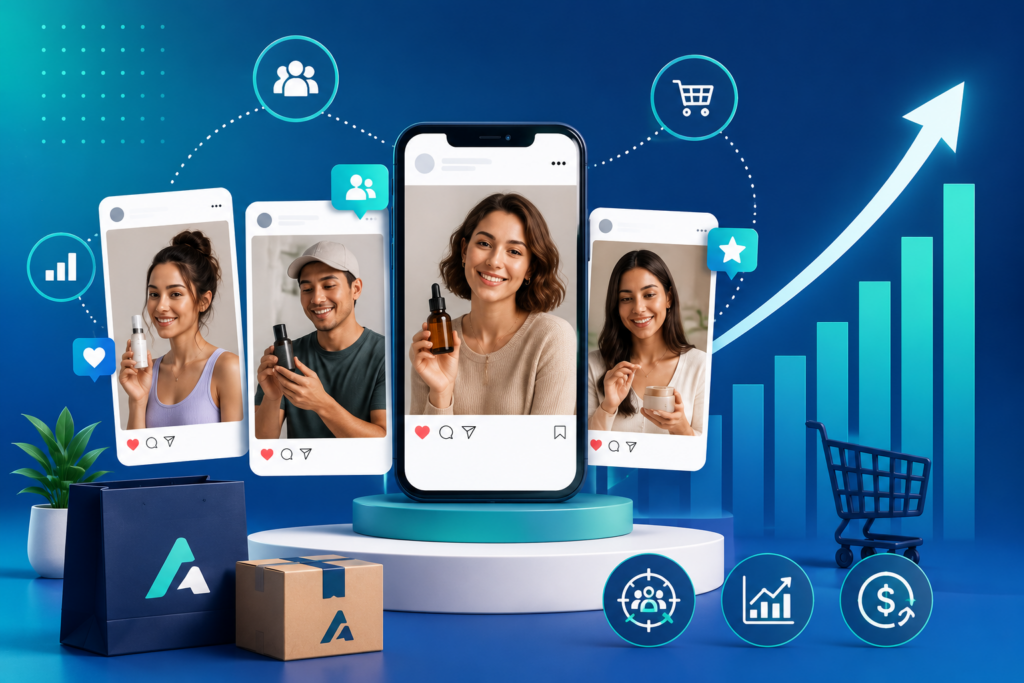
Micro influencer marketing has become one of the most effective growth strategies in modern ecommerce.
As customer acquisition costs continue rising across Meta, TikTok, Google, and other paid channels, ecommerce brands are increasingly looking for more efficient ways to build trust, improve conversion rates, and generate profitable customer acquisition. At the same time, consumers are becoming more skeptical of highly polished advertising and celebrity-style sponsorships that feel disconnected from real buying behavior.
That combination is creating a major shift toward smaller creators with highly engaged niche audiences.
For many ecommerce brands, micro influencers are now driving:
- stronger engagement
- lower acquisition costs
- better creative performance
- higher trust signals
- more efficient ROAS
- stronger conversion quality
This trend reflects a broader transformation happening across digital commerce.
Consumers increasingly trust relatable creators more than traditional brand advertising.
In many cases, shoppers now discover products through creators before they ever interact with a brand directly. A recommendation from a trusted niche creator often feels more authentic, more believable, and more useful than a polished ad campaign produced by the brand itself.
As creator-led commerce continues expanding, ecommerce brands are rethinking how customer acquisition, content creation, attribution, and paid social performance work together.
What Is a Micro Influencer?
A micro influencer is typically a creator with a smaller but highly engaged audience within a specific niche or community.
While exact definitions vary, micro influencers generally fall within the range of:
- 5,000 to 100,000 followers
However, follower count alone is not what makes micro influencers valuable.
Their real advantage is audience relationship quality.
Micro influencers often build highly engaged communities centered around specific interests, lifestyles, or expertise areas such as:
- fitness
- skincare
- nutrition
- parenting
- gaming
- home organization
- outdoor lifestyle
- fashion
- ecommerce product reviews
- wellness
Unlike celebrity influencers or large macro creators, smaller creators typically maintain closer relationships with their audiences. Their content often feels more conversational and less commercialized, which increases trust and engagement.
That trust has become extremely valuable in modern ecommerce environments where consumers are overwhelmed with advertising and constantly evaluating credibility.
Why Micro Influencers Are Becoming More Valuable for E-commerce Brands
The rise of micro influencer marketing is closely tied to changing consumer behavior.
Modern consumers increasingly make buying decisions based on:
- social proof
- peer-style recommendations
- creator experiences
- community trust
- authentic demonstrations
- platform-native content
Consumers want to see how products fit into real life.
A highly polished commercial may communicate brand awareness, but a creator casually demonstrating how they use a product during their normal routine often creates stronger purchase intent.
This is especially true on platforms like TikTok, Instagram Reels, and YouTube Shorts where users expect content to feel authentic, fast-moving, and personality-driven.
In many cases, creator content performs well because it reduces the psychological distance between the customer and the product.
The recommendation feels more relatable.
That relatability increasingly influences conversion behavior.
Why Smaller Creators Often Generate Higher Engagement
One reason micro influencers often produce strong ROAS is because smaller creators tend to generate significantly higher engagement rates than larger influencers.
This happens for several reasons.
First, audiences often perceive smaller creators as more authentic and accessible. Followers may feel like they genuinely know the creator rather than simply consuming celebrity-style content.
Second, niche communities tend to be more tightly aligned around specific interests or problems. A creator focused entirely on marathon nutrition, for example, may have an audience with very high purchase intent for hydration products, recovery supplements, or running accessories.
Third, smaller creators often produce content that feels less scripted and more platform-native. Their recommendations frequently resemble genuine product discoveries rather than formal sponsorships.
This combination of:
- trust
- niche alignment
- authenticity
- conversational delivery
often leads to:
- stronger engagement
- longer watch times
- higher click-through rates
- improved conversion efficiency
For ecommerce brands, that can translate into significantly stronger paid media performance.
Why Authenticity Matters More in Social Commerce
One of the biggest shifts in e-commerce over the past several years is that consumers increasingly buy products through trust-driven content ecosystems instead of traditional advertising funnels.
Historically, ecommerce brands relied heavily on:
- direct-response ads
- search campaigns
- polished product creatives
- static landing pages
Today, social commerce platforms reward content that feels:
- native
- conversational
- experience-driven
- educational
- emotionally relatable
This is one reason micro influencer content often performs exceptionally well in paid social environments.
The content feels closer to user-generated content than traditional advertising.
A creator casually explaining why they like a skincare product often feels more trustworthy than a scripted brand commercial. A runner documenting marathon recovery routines may generate stronger supplement demand than a standard product image ad.
Modern consumers increasingly respond to:
- demonstrated experience
- relatable storytelling
- community trust
- social validation
rather than polished advertising alone.
Why Micro Influencer Marketing Works Especially Well for Niche E-commerce Brands
Micro influencer marketing is particularly effective for niche e-commerce brands because smaller creators often attract highly targeted audiences with very specific interests.
For example:
- A specialty coffee brand may partner with home brewing creators.
- A hydration company may work with endurance athletes.
- A skincare brand may collaborate with creators focused on sensitive skin education.
- A tactical gear company may target outdoor survival communities.
- A wellness brand may work with creators focused on sleep optimization or stress recovery.
These partnerships often create stronger audience alignment than broader celebrity campaigns.
Instead of reaching millions of loosely interested viewers, brands reach smaller communities where product relevance is significantly higher.
That precision often improves:
- acquisition efficiency
- conversion rates
- retention quality
- customer trust
- long-term value
In many cases, smaller creators help ecommerce brands scale more efficiently because the audience fit is stronger from the beginning.
Why Micro Influencer Content Performs So Well in Paid Social Ads
Many e-commerce brands are no longer using creator content only for organic influencer campaigns.
Instead, they are increasingly integrating influencer-generated content directly into paid social advertising systems.
This is happening because creator content often performs better than traditional branded ads in social feeds.
Micro influencer content tends to:
- feel native to the platform
- resemble organic user behavior
- generate stronger engagement signals
- hold attention longer
- create stronger trust signals
- improve content relevance
Platforms like TikTok and Meta increasingly reward:
- watch time
- interaction quality
- engagement behavior
- content relevance
- creative freshness
As a result, creator-style ads often outperform overly polished brand creatives because they align more closely with how users naturally consume content.
This is one reason many ecommerce brands now view creators not only as influencers, but also as scalable creative production partners.
How Creator-Led Commerce Is Reshaping E-commerce Acquisition
Micro influencer marketing is part of a much larger shift toward creator-led commerce.
In creator-led commerce ecosystems, creators increasingly function as:
- customer acquisition channels
- trust amplifiers
- product educators
- content producers
- recommendation engines
- social proof systems
This changes how ecommerce brands approach growth.
Instead of relying only on:
- traditional paid ads
- keyword targeting
- static product messaging
brands increasingly scale through:
- creator ecosystems
- UGC-driven advertising
- community trust
- social recommendation loops
- content-first acquisition
In many product categories, consumers now discover products through creators before they ever visit a brand’s website.
That shift fundamentally changes how ecommerce visibility and conversion work.
Why Attribution Becomes More Complex with Influencer Marketing
As creator-led acquisition grows, attribution becomes significantly harder.
Modern customer journeys are increasingly fragmented across:
- creator content
- TikTok discovery
- Meta retargeting
- YouTube reviews
- email campaigns
- organic search
- direct traffic
A customer may:
- Discover a product through a creator video
- See paid retargeting later
- Research the product independently
- Return through email marketing
- Purchase days or weeks later
Traditional platform attribution often struggles to capture this full journey accurately.
That creates visibility gaps around:
- creator contribution
- assisted conversions
- cross-channel influence
- customer acquisition quality
- long-term customer value
Many ecommerce brands still rely too heavily on isolated platform metrics that fail to reflect how modern social commerce actually works.
Why First-Party Attribution Matters for Influencer Marketing
As influencer ecosystems become more complex, first-party attribution becomes increasingly important.
First-party attribution helps ecommerce brands:
- connect creator activity to actual revenue outcomes
- analyze customer acquisition quality
- understand cross-channel customer journeys
- measure blended ROAS
- evaluate returning customer behavior
- identify high-performing creators
- optimize creator partnerships more intelligently
This matters because not all creator-driven conversions are equally valuable.
Some creators may generate:
- low-intent traffic
- discount-focused customers
- weak retention
- poor long-term profitability
Others may consistently drive:
- high-LTV customers
- stronger repeat purchase behavior
- better margin performance
- stronger retention quality
Without stronger attribution infrastructure, ecommerce brands may struggle to identify those differences accurately.
How AdBeacon Helps E-commerce Brands Measure Influencer Performance
AdBeacon helps ecommerce brands improve attribution visibility across creator, paid social, and ecommerce campaigns using first-party data infrastructure.
This helps brands better understand:
- which creators drive actual revenue
- which campaigns generate profitable customers
- how customer journeys unfold across channels
- which acquisition sources contribute to long-term growth
- how creator content influences conversion behavior
AdBeacon supports:
- cross-channel attribution tracking
- customer journey visibility
- Shopify attribution insights
- creator campaign analysis
- revenue-focused reporting
- media buying optimization
- performance visibility across paid and organic channels
As creator-led commerce continues expanding, independent attribution becomes increasingly important for accurate performance analysis.
Why Micro Influencers Often Outperform Macro Influencers on ROAS
Macro influencers still provide value for:
- mass visibility
- product launches
- broad awareness campaigns
- large-scale reach
However, micro influencers often outperform in direct-response ecommerce environments because they combine:
- stronger audience trust
- lower partnership costs
- higher engagement rates
- better niche alignment
- more authentic content perception
This often creates more efficient customer acquisition economics.
A smaller creator with a deeply engaged audience may generate significantly stronger conversion performance than a celebrity creator with millions of passive followers.
For ecommerce brands focused on profitable scaling instead of vanity metrics, that distinction matters significantly.
What High-Performing E-commerce Brands Are Doing Differently
Leading e-commerce brands are increasingly building scalable creator ecosystems instead of relying on isolated influencer sponsorships.
These brands often:
- work with dozens or hundreds of niche creators
- continuously test creator content
- repurpose influencer assets into paid ads
- combine creator marketing with media buying systems
- prioritize customer quality over vanity metrics
- improve first-party attribution infrastructure
- analyze creator performance through revenue contribution
The goal is no longer simply to generate impressions.
The goal is to build scalable, trust-driven customer acquisition systems.
That shift reflects the growing importance of creators within modern ecommerce growth strategies.
Common Mistakes E-commerce Brands Make with Influencer Marketing
Many e-commerce brands still approach influencer marketing with outdated assumptions.
One common mistake is selecting creators based primarily on follower count instead of audience alignment and engagement quality. A smaller creator with a highly trusted niche audience often produces better conversion performance than a larger creator with broad but passive reach.
Another major mistake is focusing too heavily on vanity metrics like views, likes, or impressions without measuring actual revenue impact or customer quality.
Brands also frequently over-script creator content. Overly controlled messaging often reduces authenticity and weakens performance on social platforms where users expect conversational, natural communication styles.
Finally, many ecommerce companies still separate influencer marketing from broader paid media and attribution systems. In reality, creator content increasingly functions as a core part of modern performance advertising infrastructure.
What E-commerce Brands Should Do Next
To improve micro influencer marketing performance, e-commerce brands should focus on building more scalable, trust-driven creator ecosystems.
That includes:
- Prioritizing niche audience alignment
- Building diversified creator partnerships
- Investing in platform-native creator content
- Repurposing creator assets into paid media
- Strengthening first-party attribution infrastructure
- Measuring customer quality and LTV
- Testing creators continuously
- Connecting influencer activity to actual revenue outcomes
As social commerce and creator-led discovery continue expanding, brands that combine authentic creator partnerships with accurate attribution systems will likely have a significant competitive advantage.
Conclusion
Micro influencer marketing is becoming one of the most effective acquisition strategies in modern e-commerce.
As consumers increasingly prioritize trust, authenticity, creator recommendations, and community validation, smaller creators are often outperforming larger influencer campaigns in:
- engagement quality
- conversion efficiency
- customer trust
- creative authenticity
- ROAS performance
The ecommerce brands that succeed in this environment will not simply buy attention.
They will build trust-driven creator ecosystems supported by:
- strong attribution
- scalable content systems
- customer intelligence
- revenue-focused optimization
AdBeacon helps ecommerce brands improve visibility into how creator partnerships influence customer acquisition, campaign performance, and long-term ecommerce growth across modern social commerce ecosystems.
Discover how AdBeacon helps brands improve first-party attribution, optimize media buying decisions, and track customer journeys more accurately across influencer and paid social campaigns.
FAQs About Micro Influencer Marketing
What is a micro influencer?
A micro influencer is a creator with a smaller but highly engaged audience, typically ranging from 5,000 to 100,000 followers within a specific niche or community.
Why do micro influencers often generate higher ROAS?
Micro influencers frequently produce stronger engagement, better audience trust, lower partnership costs, and more authentic content that converts effectively in social commerce environments.
Are micro influencers better than macro influencers?
Not always. Micro influencers often perform better for niche targeting and direct-response ecommerce campaigns, while macro influencers may be stronger for broad awareness and large-scale visibility.
Why does attribution matter in influencer marketing?
Influencer-driven customer journeys are often multi-touch and cross-channel, making it difficult to measure actual revenue impact using platform-reported metrics alone.
What is first-party attribution in influencer marketing?
First-party attribution uses owned customer and purchase data to analyze how creator activity influences conversions, customer acquisition, and revenue performance across channels.
How does AdBeacon help e-commerce brands measure influencer campaigns?
AdBeacon helps ecommerce brands improve first-party attribution visibility, customer journey analysis, and revenue-focused reporting across influencer, paid social, and ecommerce campaigns.
What platforms work best for micro influencer marketing?
Micro influencer strategies commonly perform well on TikTok, Instagram, YouTube Shorts, Pinterest, and other creator-driven social commerce platforms.