Should You Advertise on ChatGPT Yet? What the First Six Months Actually Show
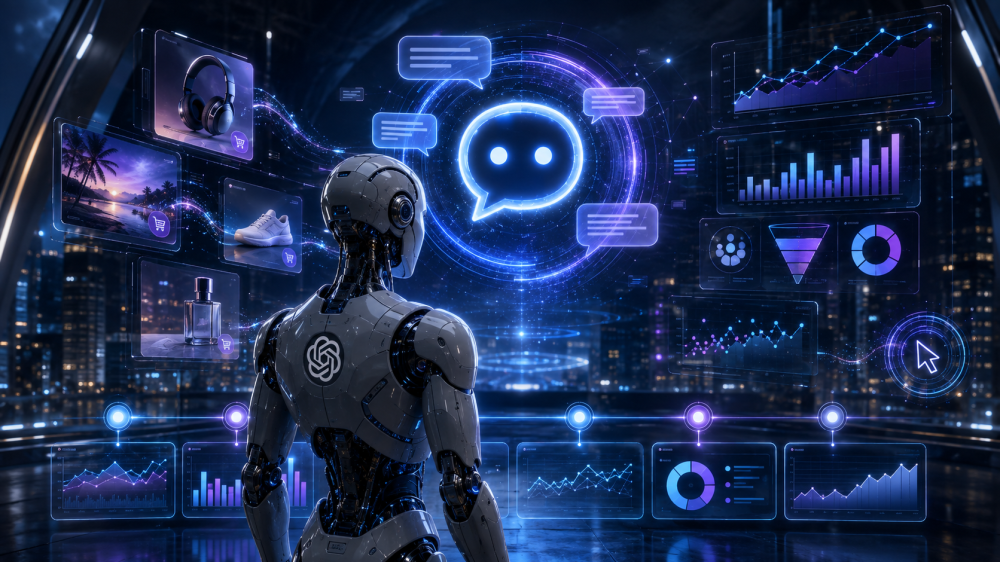
ChatGPT ads went from a controversial January announcement to a fully open self-serve platform in under six months.
Ads went live for US free-tier users on February 9, 2026.
By July, OpenAI had opened a broader self-serve “Advertise in ChatGPT” platform with named launch advertisers like Best Buy, Lowe’s, and VistaPrint, and just over half of US free-tier replies reportedly now carry a sponsored block.
That’s a fast rollout by any standard, and it leaves brands with a genuine question: is this worth budget yet, or is the early performance data still too thin to trust?
Here’s the actual timeline, what the numbers say so far, why Perplexity made the opposite bet, and what to watch before committing real spend.
How Fast This Actually Moved
OpenAI’s ad rollout compressed what used to take platforms years into months.
Ads launched for US Free and ChatGPT Go users on February 9, 2026, restricted to that tier only, with Plus, Pro, Business, Enterprise, and Education remaining ad-free.
A self-serve OpenAI Ads Manager entered closed testing April 7 and went fully live May 5, with CPC bidding open to any US business and no minimum spend, a sharp drop from the roughly $200,000 commitment required of early beta advertisers.
CPA (cost-per-acquisition) bidding activated June 5, alongside the platform’s first European market, the UK. By July 22, OpenAI had opened its broader “Advertise in ChatGPT” self-serve platform to a wider advertiser base.
Pricing compressed just as fast as access expanded.
Early CPMs around $60 dropped to roughly $15 to $25 within about nine weeks of the self-serve launch opening, which is the kind of rapid price discovery you’d expect from a platform still figuring out real demand rather than one with a mature, stable auction.
What the Performance Data Actually Shows
The numbers are more real than they were a few months ago, but they still deserve real scrutiny about who’s reporting them and under what conditions.
Criteo, OpenAI’s measurement partner, reported that users referred from ChatGPT convert at roughly 1.5 times the rate of other referral channels, with select retail categories approaching twice the rate of traditional search.
That’s a genuinely strong number, but it came from a curated pilot with hand-picked advertisers in high-intent categories like electronics and home goods, not a representative cross-section of advertisers. Treat it as a ceiling for what’s achievable under favorable conditions, not an average.
Independent tracking tells a more textured story.
- First Page Sage’s analysis across 19 industries found conversion rates ranging from 0.2 percent to 5.8 percent, with several service categories, HVAC, legal, construction, matching or beating their own reported Google Ads benchmarks in the same period.
- One firm that ran its own 15-day live spend test found day-to-day ROAS swinging from roughly 0.2x on the worst days to 2.9x on the best, which is a useful reminder that early-platform volatility is real even when the headline averages look promising.
Why Perplexity Walked Away From the Same Bet
The most useful context for evaluating any of this is that not every AI platform made the same call.
Perplexity piloted sponsored follow-up questions and answers starting in November 2024, paused new advertisers in October 2025, and fully abandoned advertising in February 2026, the same month ChatGPT’s ads went live.
Company executives told the Financial Times the reasoning directly: once a user suspects an answer might carry commercial influence, they start doubting the answer itself, not just the sponsored part of it.
One executive put it plainly: the business is “giving the truth, the right answers,” and ads were judged “misaligned with what users want.”
Anthropic’s Claude has stayed deliberately ad-free and leaned into that positioning publicly, including a widely discussed ad campaign contrasting itself with OpenAI’s approach.
Google and Microsoft went the other direction entirely: Google now shows ads in roughly a quarter of AI Mode and AI Overview results and has confirmed plans to bring ads to Gemini, while Microsoft Copilot has run ads since 2023, when it was still Bing Chat.
The AI industry has genuinely split into two camps rather than converging on one model, and that split is itself a signal worth paying attention to, not just background noise.
The Trust Number That Should Temper Any Excitement About the Performance Numbers
The conversion data above exists inside a channel where consumer trust in the medium is still an open, actively debated question.
- An Ipsos survey found 63% of people think ads will make them trust ChatGPT’s results less.
- A separate global study from DoubleVerify found only 34% of North American consumers view AI chat advertising positively.
- Forrester’s polling in the days immediately after launch found the core objection wasn’t really about ad visibility or labeling, it was that the mere presence of ads created doubt about whether any answer, sponsored or not, had been shaped by who paid.
That matters for how a brand should read the encouraging conversion numbers.
A channel can post a genuinely good early conversion rate while still operating inside a trust environment that could shift, tighten, or erode as usage scales and users become more attuned to sponsored placements.
OpenAI itself has published pilot updates claiming no measurable trust impact so far, but that’s a self-reported metric from the party with every incentive to report it favorably, worth weighing alongside independent survey data rather than instead of it.
It’s the same dynamic AdBeacon has written about with platform-reported ROAS vs actual ROAS on more established channels, just showing up on a brand-new one before the industry has built any independent way to check it.
What to Actually Do Right Now
- Treat published conversion and ROAS figures as directional, not as a budget-setting benchmark. The strongest numbers circulating right now come from curated pilots with high-intent categories and hand-picked advertisers, not a representative sample of what a new advertiser should expect.
- Start with a small, defined test budget rather than a full reallocation. The self-serve platform’s no-minimum-spend structure makes this genuinely low-risk to test in a way that wasn’t possible six months ago.
- Measure against your own verified conversion data, not just the platform’s self-reported numbers, since a new ad platform’s own dashboard has every reason to look as good as possible early in its growth phase.
- Watch the trust and dismissal-rate metrics as closely as the performance metrics. A channel with strong early CPCs but declining user trust in its answers is a different bet than one with both trending in the right direction.
- Keep an eye on Perplexity’s position, not just OpenAI’s. If the no-ads bet proves right and Perplexity’s subscription growth outpaces ChatGPT’s ad-supported growth, that’s a real signal about how much of this current performance data will hold up at scale.
If you want to see how AI-platform advertising performance compares to your other channels using independent, first-party conversion data instead of a new platform’s own reporting, book a live AdBeacon demo.
—-
FAQ
When did ChatGPT ads officially launch?
Ads went live for US users on the Free and ChatGPT Go tiers on February 9, 2026. Plus, Pro, Business, Enterprise, and Education tiers remain ad-free. A self-serve Ads Manager followed, going fully live to all US businesses on May 5, 2026.
How much do ChatGPT ads cost?
Early CPMs started around $60 and dropped to roughly $15 to $25 within about nine weeks of the self-serve platform opening. CPC figures reported across various sources generally range from $2 to $8 depending on vertical and competition.
Are ChatGPT ads actually effective?
Early data is encouraging but comes with caveats. OpenAI’s measurement partner Criteo reported 1.5x conversion rates versus other referral channels from a curated pilot, while broader independent tracking found conversion rates ranging widely from 0.2 percent to 5.8 percent depending on industry.
Why did Perplexity stop running ads?
Perplexity piloted advertising starting in 2024, then fully abandoned it in February 2026, citing concerns that any presence of sponsored content undermines user trust in the accuracy of its answers overall, not just the sponsored portions.
Do ads on ChatGPT influence its answers?
OpenAI states that ads never influence ChatGPT’s underlying answers, run on separate systems, and remain clearly labeled and visually separated. Independent surveys nonetheless find a majority of users report reduced trust in AI results once advertising is present, regardless of these separations.
Sources
- Testing Ads in ChatGPT, OpenAI
- ChatGPT Ads Go Performance: CPA Live, 1.5x Conversions vs Search, NateCue
- ChatGPT Ads Conversion Rate: 2026 Report, First Page Sage
- Perplexity Stops Testing Advertising, Search Engine Land
- AI Skepticism Is Still High, and Ads Could Hurt Trust Even More, Ipsos
- AI Chat Ads Struggle to Win Consumer Trust, MediaCopilot