A Federal Court Just Made It Harder for Amazon to Block AI Shopping Agents. Here's Why That Matters for Attribution
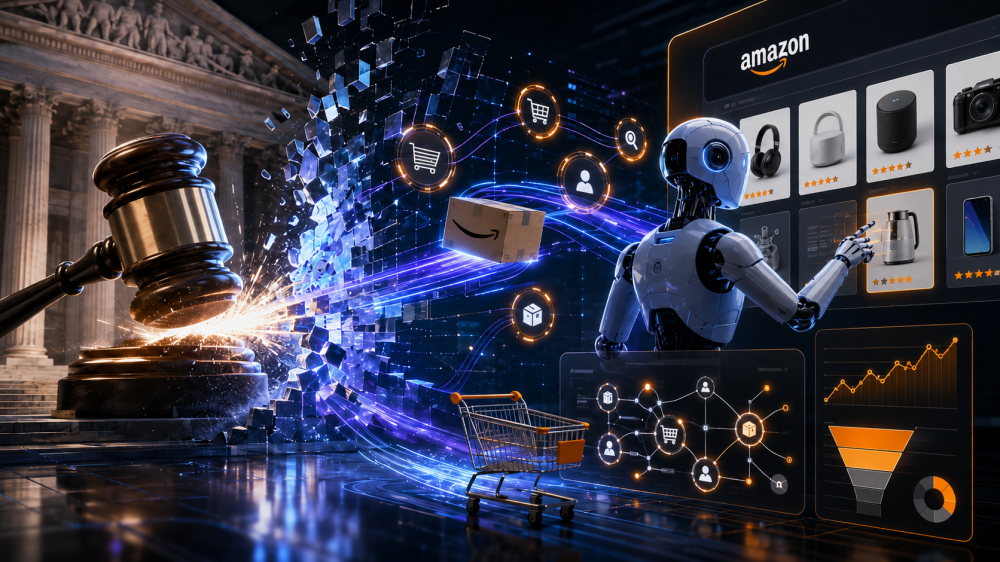
On August 4, 2026, the Ninth Circuit Court of Appeals vacated a preliminary injunction that had blocked Perplexity’s AI browser, Comet, from shopping on Amazon on users’ behalf.
The ruling is narrow on paper, tied specifically to how Comet’s architecture works, but its practical effect is much bigger: it just got harder for a major retailer to legally wall off autonomous shopping agents it doesn’t control.
If agentic checkout keeps growing with fewer legal levers retailers can pull to stop it, the measurement gap these agents already create stops being a future problem and becomes a current one.
Here’s what the court actually ruled, why it’s narrower than the headlines suggest, and what it means for how brands need to think about attribution.
What Amazon Sued Over, and What the Court Actually Decided
Amazon sued Perplexity in November 2025, alleging that Comet’s AI “Assistant,” which can log into a user’s Amazon account and complete purchases on their behalf, violated the Computer Fraud and Abuse Act and California’s equivalent statute by accessing Amazon’s systems without authorization.
A district court agreed at the preliminary stage, granting Amazon an injunction in March 2026 on the theory that a user’s instruction to an agent doesn’t extend the user’s own authorization to the agent itself.
The Ninth Circuit disagreed.
Writing for a unanimous panel, the court held that it’s the user, not Perplexity, who accesses Amazon’s computers under the CFAA’s plain language, since Comet’s Assistant works by receiving screenshots that the user’s own browser already captured rather than communicating directly with Amazon’s servers.
Because the statute requires the defendant to have accessed a protected computer, and Perplexity itself never touches Amazon’s systems in that architecture, the court found Amazon unlikely to succeed on the merits and vacated the injunction outright.
Why This Is Narrower Than It Sounds, and Why It Still Matters
The court was explicit that its holding is fact-specific and tied to Comet’s particular architecture, screenshot-based, not a blanket ruling that all AI shopping agents are immune from platform restrictions.
A more autonomous agent that communicates directly with a site’s servers rather than relaying a user’s own browser data could be evaluated differently.
The case is also remanded, not resolved, and Amazon can still seek a rehearing or petition further.
That said, the practical signal is hard to ignore.
This is reportedly the first federal appellate ruling to address whether AI agents acting on a user’s behalf can lawfully access online platforms, and it went against the retailer trying to block one.
The court also found Amazon’s claimed harms, degraded shopping experience, cybersecurity risk, relatively weak as a basis for an injunction.
For a retailer whose entire legal strategy was built on treating agent access the same as unauthorized hacking, that’s a meaningfully worse starting position for the next fight, even in a case this specific.
The Attribution Gap This Accelerates
Agentic checkout was already growing before this ruling. What changes is the legal certainty retailers have that they can simply block it.
AdBeacon has written before about the measurement problem AI shopping agents create structurally: an agent making a purchase via API calls or captured screenshots doesn’t trigger client-side JavaScript the way a human browser does.
No cookies get set. No thank-you page loads to fire a conversion pixel.
The entire funnel that most attribution tools were built to measure, click, session, landing page, conversion event, can collapse into a single interaction that standard tracking doesn’t see at all.
A legal environment where major platforms have fewer tools to simply shut agentic shopping tools out means more of that invisible volume, not less.
Shopify has already reported AI-attributed orders growing elevenfold between January 2025 and March 2026, with AI-referred traffic up sevenfold over the same period.
A ruling that makes it harder for the largest retailer in the country to block an agent like Comet is a signal that this volume keeps compounding on a longer runway than brands may have been planning around.
What to Actually Do About It
- Don’t wait for platform-side blocking to solve this for you. This ruling is one more reason to assume agentic traffic keeps growing on its own terms rather than getting contained by retailer pushback.
- Audit whether your current tracking can see agent-originated purchases at all. If your attribution stack depends entirely on client-side pixels and cookie-based sessions, an agent-driven purchase is likely invisible to it by design, not by a gap you can patch with a settings change.
- Treat server-side, order-level verification as the fallback that still works. A completed transaction in your own store’s order data doesn’t depend on whether an agent fired a pixel correctly, which makes it the more durable signal as agent-mediated purchases scale.
- Watch how this case actually resolves, not just this ruling. The case is remanded and Amazon has further options, so the legal landscape here is still being written, not settled.
If you want to see how independent, first-party attribution holds up against measurement gaps that platform-native tracking simply can’t see, book a live AdBeacon demo.
—-
FAQ
What did the Ninth Circuit actually rule in Amazon v. Perplexity?
On August 4, 2026, the court vacated a preliminary injunction that had blocked Perplexity’s Comet browser from shopping on Amazon on users’ behalf, finding that it’s the user, not Perplexity, who accesses Amazon’s computer systems under the Computer Fraud and Abuse Act, since Comet’s Assistant works from screenshots the user’s own browser captured.
Does this ruling mean all AI shopping agents can now access any retailer freely?
No. The court was explicit that its holding is narrow and tied to the specific way Comet’s architecture works. It noted that other AI agents with more direct communication to a website’s servers could still face liability, and the case itself was remanded rather than finally decided.
Is the Amazon v. Perplexity case over?
No. The Ninth Circuit’s ruling vacated the injunction and sent the case back for further proceedings. Amazon can seek a rehearing or pursue further appeal.
Why does this ruling matter for ecommerce attribution specifically?
Agentic shopping tools already create a measurement gap, since agent-driven purchases often don’t trigger the client-side tracking (pixels, cookies, session data) that most attribution tools depend on. A ruling that makes it legally harder for retailers to block these agents means that gap is likely to widen rather than get contained.
How can a brand track purchases made through an AI shopping agent?
Server-side, order-level data tied to your own store’s confirmed transactions is more durable than client-side pixel tracking for this specific gap, since it doesn’t depend on an agent triggering the same tracking events a human browser session would.
Sources
- Ninth Circuit Rules on AI Agent ‘Access’ to Third-Party Websites Under CFAA, Cooley
- Ninth Circuit Narrows CFAA Reach in Perplexity Agentic Commerce Ruling, PYMNTS
- Appeals Court Agrees with EFF That Building a Web Browser Doesn’t Violate the CFAA, Electronic Frontier Foundation
- US Court Overturns Amazon Injunction Against Perplexity AI, Yahoo Finance