You Ever Wonder Who Gets the Credit When an AI Buys Something for Someone
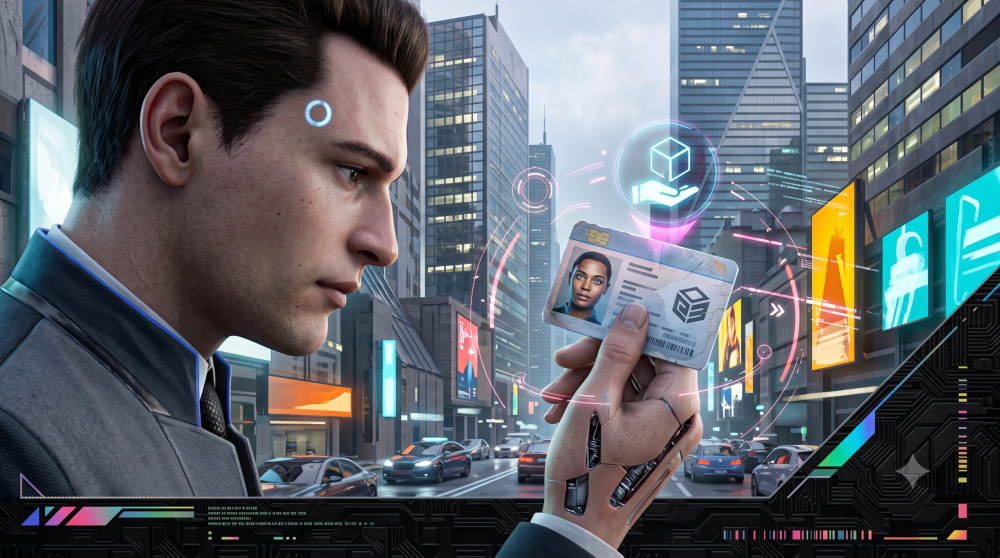
You ever wonder who actually gets the credit when an AI buys something for someone. Because that’s not a hypothetical anymore.
It’s happening right now.Google already has a Buy for Me button live with select retailers.
The AI browses, compares, and completes the purchase, all without the shopper ever landing on your site the normal way.
What’s Actually Live Right Now
Google’s agentic checkout works like this: a shopper sets a target price and preferences on a product listing inside AI Mode, gets a notification when the price drops, and taps Buy for Me.
Behind the scenes, Google adds the item to the shopper’s cart on the merchant’s own site and completes checkout on their behalf using Google Pay, according to Google’s own description of the feature.
The rollout began with US product listings and has been expanding through 2026.
Google is not alone here. Amazon has been piloting its own Buy for Me tool for purchases from third-party brand sites, Microsoft launched a buying experience inside Copilot with select retailers, and OpenAI has been building agentic checkout into ChatGPT, according to Klaviyo’s coverage of the agentic shopping wave.
Every major AI platform with a shopping surface is racing toward the same capability at roughly the same time.
Why Last-Click Attribution Has No Idea What To Do With This
Think about what that does to last-click attribution. There’s no click to attribute to. There’s no landing page session.
AI agents do not trigger client-side JavaScript the way a human browser does.
They make API calls directly to merchant systems, which means no cookies get set and no thank-you page loads to fire a conversion pixel, according to Digital Applied’s guide to agentic commerce attribution.
The entire purchase funnel that every major analytics and advertising platform was built to measure collapses into a single interaction that most measurement tools cannot see at all.
The whole model breaks quietly in the background while your reports keep showing numbers like nothing changed.
That is the specific danger here. Nothing crashes. Nothing throws an error.
The sale still happened, the revenue still landed, and your dashboard just quietly attributes it to whatever bucket happens to be closest.
It’s Not Hypothetical Anymore
Agent-driven purchases are still small today, but they are not nothing.
Shopify has reported that AI-attributed orders grew 11 times over between January 2025 and March 2026, with AI-referred traffic up sevenfold over the same period.
The infrastructure for this is being built right now, this quarter, not sometime in the distant future.
The measurement gap is arguably a bigger problem than the volume itself. Roughly 70 percent of AI referrals are invisible in a standard GA4 setup, showing up misclassified as direct traffic or branded organic search instead of AI-driven, according to AI Advantage Agency’s analysis of agentic commerce measurement.
That means whatever your GA4 currently reports as AI referral traffic is closer to the floor of what is actually happening than the ceiling.
Where These Sales Are Actually Landing In Your Reports
Most brands aren’t even set up to see when a sale came from an agent instead of a person.
It just gets folded into whatever bucket is closest, usually direct traffic or branded search, since a purchase completed through an API call carries none of the referral signals a browser-based session normally leaves behind.
This is not a reporting bug you can patch with a new dashboard filter.
Standard attribution was built on an assumption that a human opens a browser, loads pages, clicks through a funnel, and lands on a thank-you page where a pixel fires.
Agent-completed purchases satisfy none of those conditions, according to Digital Applied’s breakdown of why the model fails architecturally.
Attribution models built for last-click optimization were never designed for a world where a purchase decision gets made inside a conversation and executed by an agent instead of a click, according to Bessemer Venture Partners’ analysis of the shift.
This is not last-click attribution getting slightly less accurate. It is last-click attribution having nothing left to click on.
The Trust Gap Is Real Too
This growth is not friction-free.
Amazon’s own Buy for Me agent frustrated both buyers and sellers during the 2025 holiday season, when AI-generated listings did not match merchants’ actual inventory.
OpenAI has faced its own data standardization challenges trying to bring in-app checkout to millions of merchants with real-time accurate pricing and availability, according to eMarketer’s reporting on the agentic commerce race.
Shoppers may be comfortable getting recommendations from an AI assistant. Trusting one to complete a purchase unsupervised is still a meaningfully bigger ask, and the platforms racing to ship this fastest have not fully solved the accuracy problems that trust depends on.
That gap does not mean the trend stalls.
It means the current small volume of agent-driven purchases is happening during exactly the messy, undercounted period where measurement infrastructure has not caught up to platform capability, which is the worst possible time to be flying blind on it.
What AdBeacon Has Already Covered on This
AdBeacon has been tracking the broader shift toward agentic commerce in agentic commerce and AI shopping agents, what ecommerce brands need to prepare for now, and the standards layer these agents are being built on in Google, Gemini, and AI commerce standards. T
his piece is narrower than either of those: it is specifically about what happens to last-click attribution the moment an agent, not a person, completes the transaction.
What To Actually Do Right Now
Go audit your GA4 direct traffic and branded organic search for unexplained growth that does not match any campaign or seasonal pattern you can account for. That unexplained lift is one of the most likely places agent-driven purchases are currently hiding.
- Make sure your product pages carry proper Schema.org Product markup. Agents parse structured data directly, and products without it force an agent to guess, which does not tend to work in your favor.
- Ask whether your ecommerce platform supports any form of server-side or API-level tracking for agent-initiated transactions specifically, rather than relying entirely on client-side pixels that agents never trigger.
- Do not assume a small reported number for AI-driven revenue means the channel is genuinely small. It more likely means most of it is currently invisible to whatever is measuring it.
- Revisit this quarterly rather than annually. The infrastructure here, from Google’s Universal Commerce Protocol to Shopify’s agentic storefronts, is being built and adjusted in real time, not on a slow annual release cycle.
This is going to keep growing. The honest starting point is admitting that most current measurement stacks, including yours, were not built to see it clearly yet.
If you want to see whether unexplained direct traffic and revenue in your reporting might actually be agent-driven purchases hiding in plain sight, book a live AdBeacon demo and look at the numbers behind the numbers.
—-
FAQ
What is Google’s “Buy for me” feature?
Buy for Me is an agentic checkout feature inside Google’s AI Mode that lets a shopper set a target price on a product, then have Google’s AI add the item to a cart on the merchant’s site and complete checkout on the shopper’s behalf using Google Pay, without the shopper visiting the site directly.
Why does last-click attribution break for AI agent purchases?
AI agents complete purchases through direct API calls to merchant systems rather than a browser session. No client-side JavaScript fires, no cookies are set, and no thank-you page loads, so none of the signals last-click attribution relies on are generated.
How common are AI agent-driven purchases right now?
They are still a small share of overall ecommerce revenue, but growing quickly. Shopify has reported AI-attributed orders grew roughly 11 times over between January 2025 and March 2026.
Can I already see AI agent purchases in Google Analytics?
Only partially. Analysis suggests roughly 70 percent of AI referral traffic is currently invisible in a standard GA4 setup, showing up misclassified as direct traffic or branded organic search instead of being attributed to an AI channel.
What can I do to prepare for agent-driven purchases right now?
Ensure your product pages have accurate Schema.org markup so agents can parse them correctly, investigate server-side tracking options for agent-initiated transactions, and audit unexplained direct traffic growth as a likely place agent purchases are currently hiding.
Sources
- Think with Google: AI Transforms Shopping in Search
- Klaviyo: Google’s Buy for Me and the Next Wave of AI-Powered Retail
- Digital Applied: AI Agent Commerce Revenue Attribution Guide 2026
- AI Advantage Agency: How to Measure Agentic Commerce Revenue Attribution
- eMarketer: Google Brings Checkout to AI Mode as It Races Rivals in Agentic Commerce
- Bessemer Venture Partners: Agentic Commerce, The Rise of the Delegated Buyer